Wall Scanner Before Fitting Kitchen Cabinets: Checks Before the First Hole
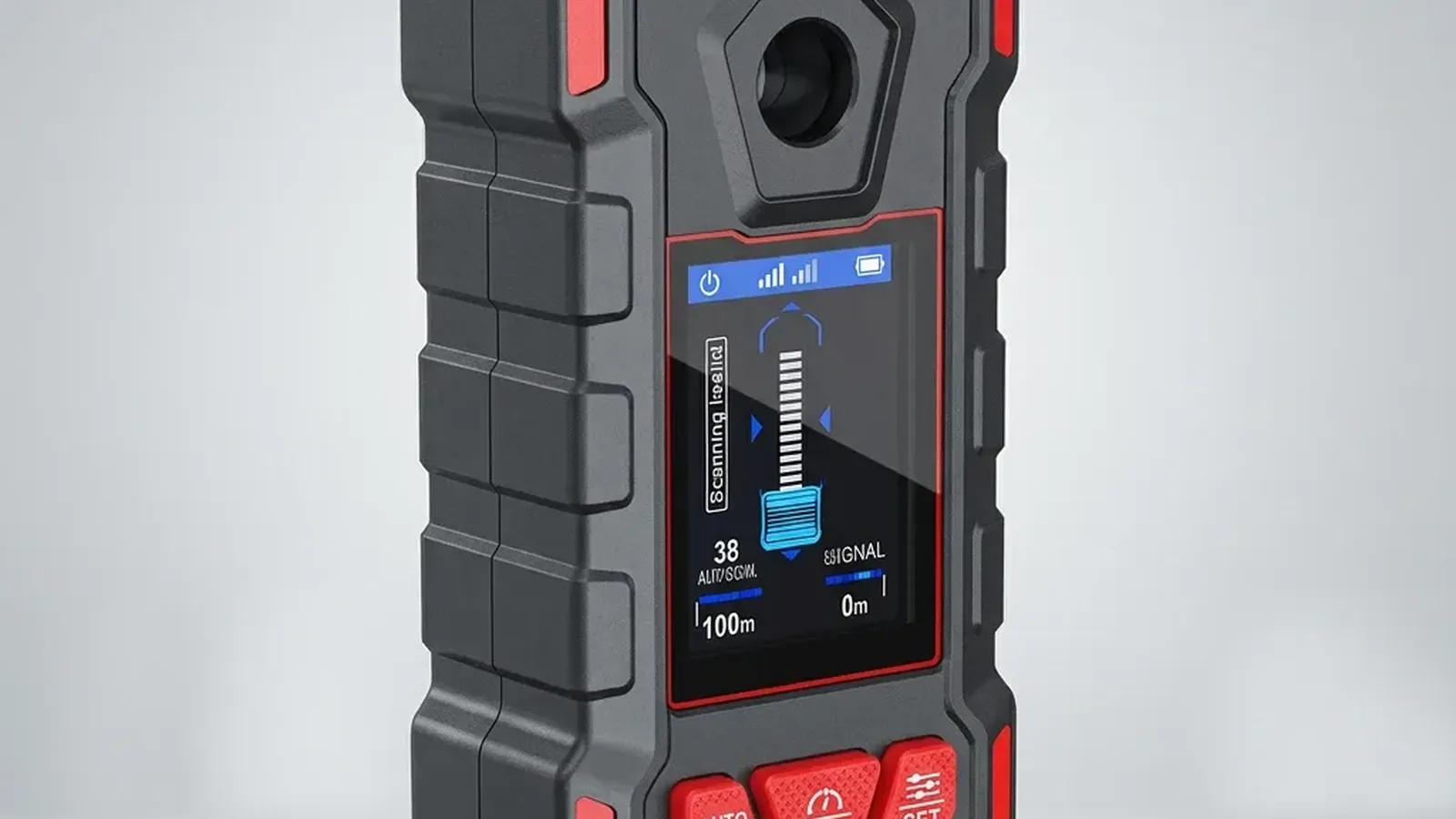
Short answer: use a wall scanner before fitting kitchen cabinets to reduce guesswork, but keep the work in separate stages: identify the wall, follow the cabinet manufacturer's fixing instructions, screen for possible cables and pipes, mark the full layout, and stop for a competent electrician, plumber or installer when the construction or services remain uncertain.
Kitchen wall cabinets are not a simple drilling job. They combine load, repeated fixings, wall construction, level lines, rail systems and concealed services. A scanner can add useful information before the first hole, but it cannot approve the wall, choose a fixing, confirm a plumbing route, prove that wiring is absent or guarantee that a cabinet will remain secure.
Separate the four decisions
First, identify the likely wall: solid masonry, dot-and-dab dry lining, timber stud, metal stud, lined masonry or an altered section. Second, read what the cabinet or rail manufacturer requires for support, position and fixings. Third, map visible service clues such as sockets, switches, extractor supplies, appliance points, water pipes, waste routes and previous kitchen alterations. Fourth, decide who is competent to resolve each unknown.
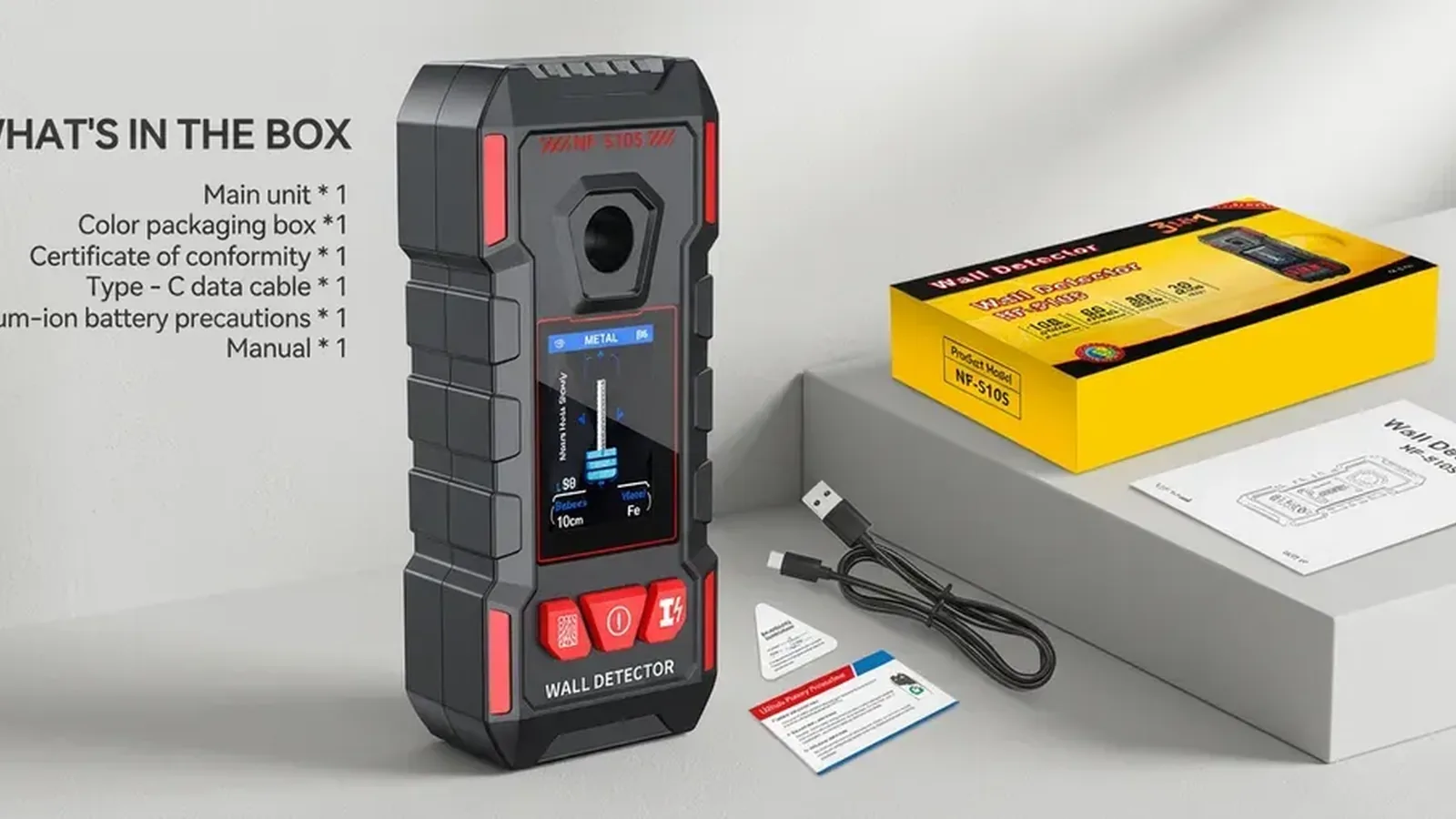
These decisions overlap, but they are not interchangeable. A scanner may indicate metal, possible live wiring or changes consistent with framing, depending on the tool and wall. It does not identify the cabinet's load path, assess the substrate or certify a fixing. Treat every scan mark as a note on the plan, not as an instruction to drill.
Identify the wall before choosing fixings
Look for evidence from existing holes, exposed areas behind removed units, socket surrounds and the building's construction, while remembering that none is conclusive on its own. Solid masonry needs a different fixing approach from plasterboard on framing. Dot-and-dab lining creates voids in front of masonry. Metal framing behaves differently from timber. Tiled splashbacks, foil-backed board, damp patches, metal beads and repair plates can all complicate readings.
If the wall remains unknown, do not hide that uncertainty under a neat cabinet line. Wall cabinets become heavy in use and rely on the installed system and actual substrate. The manufacturer's instructions and competent installation judgement carry more weight than one detector response.
What the scanner contributes at each stage
| Stage | What scanning may add | What scanning cannot decide |
|---|---|---|
| Wall identification | Possible indications of metal, timber-like areas or changes in build-up. | The exact construction, condition or load suitability. |
| Service screening | Warnings and patterns that deserve wider investigation. | That every cable, pipe or concealed service has been found. |
| Cabinet layout | Information that may help avoid an obvious suspect zone. | The fixing positions required by the cabinet system. |
| Trade decision | Evidence that the wall is more complex than expected. | Electrical, plumbing or structural approval. |
Plan the complete layout before scanning
Mark the cabinet height, rail or bracket line with a level. Include cabinet edges, end panels, extractor position and clearances required by the kitchen design. Then add every visible service clue: sockets, switches, appliance outlets, controls, pipe boxing, radiator connections, taps, waste routes and previous holes.
Once the layout is visible, scan a wider band than the exact screw line. Move slowly, keep the detector flat and repeat each pass from another starting point. Cross-check an unexplained line from another direction. Mark only repeatable indications and record broad or inconsistent areas as no-drill zones until they are resolved.
Screen for services without assuming clearance
Kitchens contain more services than most rooms. Electrical Safety First highlights the risk of drilling, nailing or screwing into hidden cables and advises locating cables, switching off power for DIY close to electrics and consulting a registered competent electrician when unsure. That guidance supports cautious planning; it does not make a scanner a safety certificate.
Do not open electrical accessories or attempt live work. If the proposed fixing line passes near a socket, switch, extractor supply, lighting point, appliance connection or another uncertain electrical route, stop and obtain appropriate advice. Safe isolation and electrical testing are separate professional practices.
Pipes need the same caution. A metal indication is not automatically a water pipe, and a quiet scan is not proof that no plastic pipe is present. If the line is close to a sink, boiler, radiator, appliance feed, boxed service route or an unknown repair, involve an appropriate plumber or installer rather than using the detector as plumbing assurance.
Build stop points into the job
Stop when the wall type remains unclear. Stop when repeated scans disagree or create a broad response. Stop when the cabinet instructions require a support condition you cannot verify. Stop when the layout crosses a plausible service route or the wall shows water damage, loose tiles, crumbling plaster or previous failed fixings.
Stopping before the first hole is less costly than repairing a cable, pipe, tile or fallen cabinet. A competent installer will want the same core information: wall type, cabinet instructions, intended layout, likely load and known service clues.
Quick pre-fitting checklist
- Read the cabinet and rail manufacturer's instructions before marking holes.
- Identify the wall type as far as the available evidence allows.
- Mark the full cabinet layout rather than isolated screw points.
- Record visible electrical and plumbing clues on that layout.
- Scan wider than the proposed fixing band and repeat every pass.
- Cross-check unclear indications from another direction.
- Treat every mark as provisional until other evidence supports it.
- Do not drill near unresolved cables, pipes, sockets, switches or appliance services.
- Use the appropriate competent trade when the risk is outside DIY competence.
- Never treat a clear scan as proof that drilling is safe.
Make the information useful to an installer
A scanner is most useful when its marks form part of a clear layout. Label cabinet edges, rail positions, suspect service areas and no-drill zones. Photograph the marked wall before the cabinets cover it. Keep the manufacturer's instructions beside the layout so the fixing decision remains tied to the actual system rather than a generic rule.
If you are still choosing a detector category, consult the best stud finder UK guide. For electrical-service planning, read the wires-before-drilling guide. Existing guides to Stanley stud finders and Zircon stud finders can help explain category differences without providing evidence for GOTMEET performance.
FAQ
Do I need a wall scanner before fitting kitchen cabinets?
It is a useful pre-drilling check in a service-heavy room, but it does not replace wall identification, cabinet instructions, suitable fixings or professional judgement.
Can a scanner tell me where to fix the cabinet rail?
No. It may highlight areas needing caution or possible support lines, but the rail positions come from the cabinet system and the verified wall construction.
Can a clear scan rule out pipes and cables?
No. Plastic pipes, unusual routes, shielding, moisture and layered construction can all create uncertainty. No result proves that every service has been found.
Who should I call when the reading is unclear?
Use a registered competent electrician for electrical uncertainty, a plumber for water or waste routes, and a kitchen installer or builder when the support and fixing method are uncertain.
Does finding a stud prove the cabinet will be secure?
No. The indication does not inspect the framing, confirm its condition, select the fixing or assess the installed load. Follow the cabinet manufacturer's instructions and competent installation advice.
Final buying advice
Use scanning to make the cabinet job more informed, not automatic. The right sequence is wall identification, manufacturer instructions, service screening, repeated marking and a decision about competence. You can review a multi-mode wall detector for broader pre-drilling checks, but no scanner should be treated as load approval, plumbing assurance or proof that drilling is safe.
Sources and further reading
- electricalsafetyfirst.org.uk: UK hidden-cable, power-off and competent-electrician guidance for DIY.
- electricalsafetyfirst.org.uk: Safe isolation is separate professional electrical-safety practice.
- hse.gov.uk: Work on or near electrical equipment requires safe systems and competence.
- bosch-professional.com: Detector-category relevance to cabinet fitting, repeat scanning and limitations; not GOTMEET performance evidence.