Best Stud Finder UK 2026: Bosch, DeWalt & NOYAFA NF-517 Compared
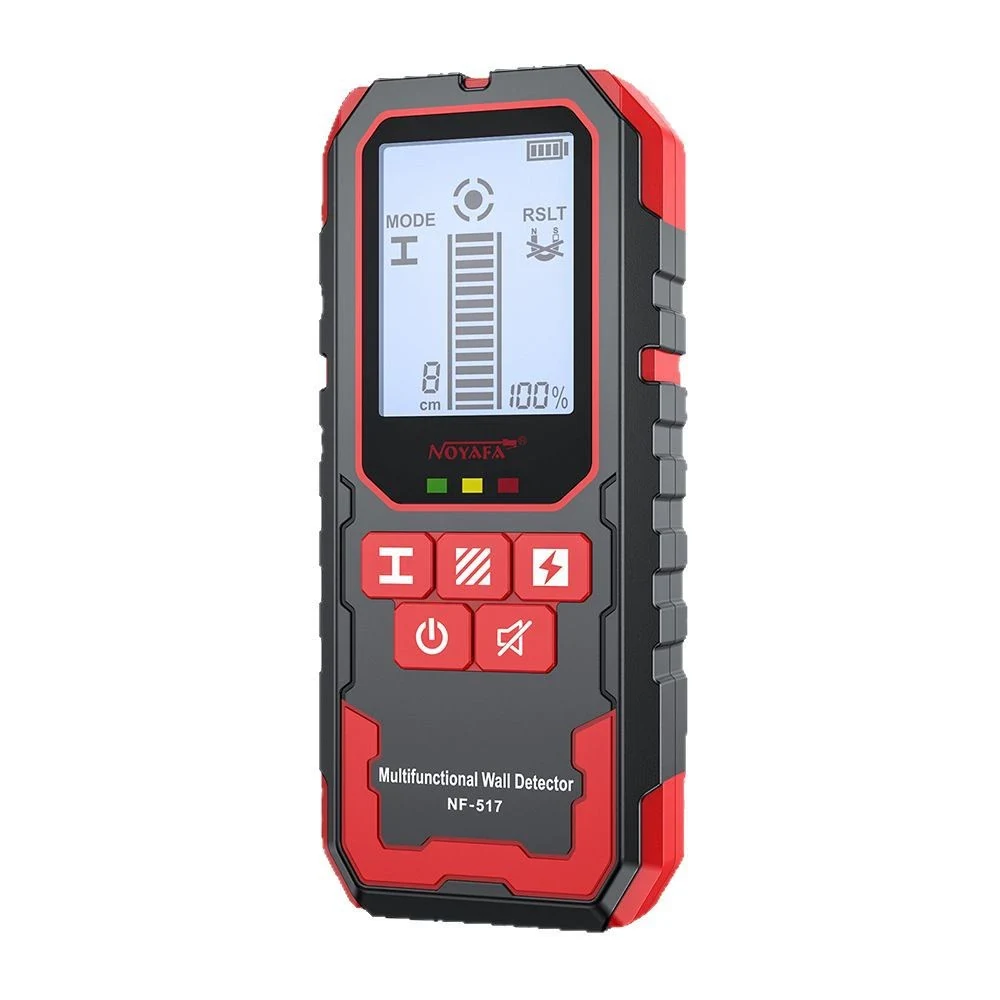
The best stud finder UK buyers can rely on has to cope with real British walls — dot-and-dab, lath-and-plaster and solid brick — not just clean plasterboard. Below we compare Bosch, DeWalt, Zircon and the NOYAFA NF-517 wall detector for wood, metal and live AC cable checks, so you stop wasting money on tools that false-trigger. Our budget pick with UK support is the NOYAFA NF-517 Wall Detector at £82.15.
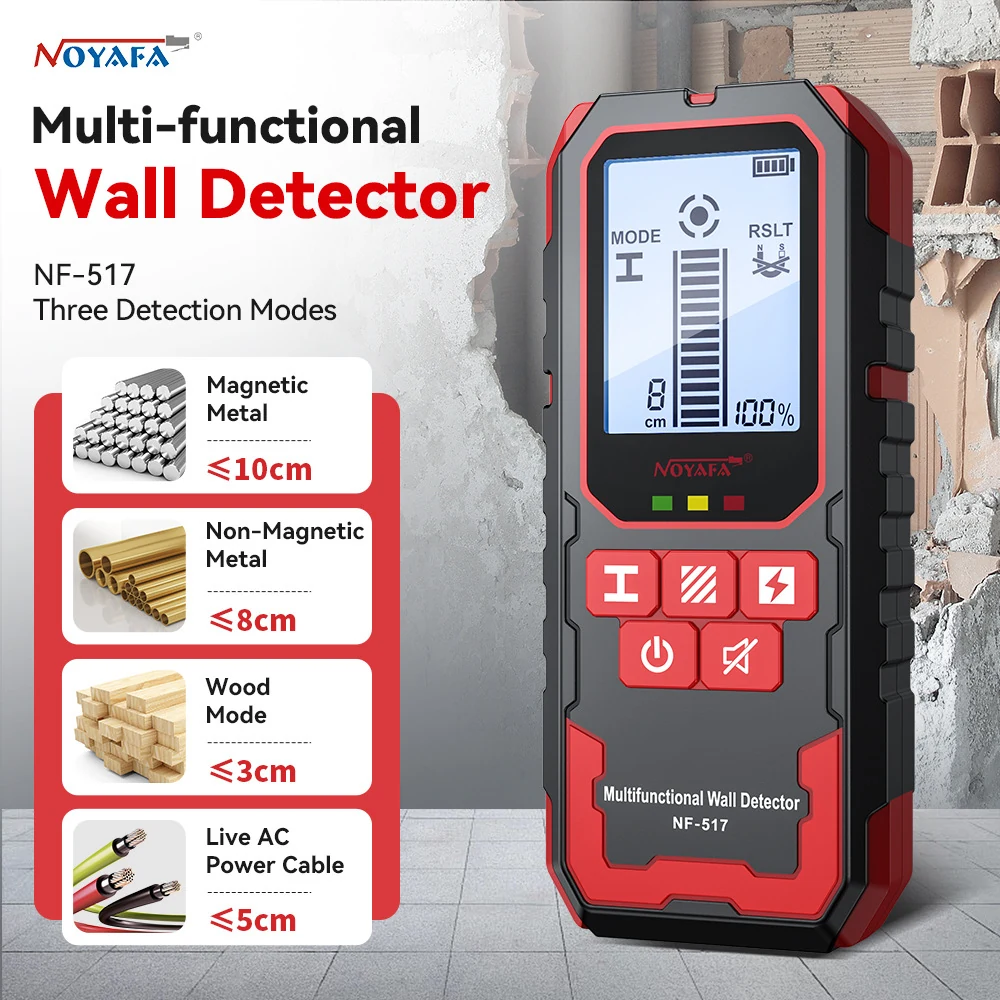
Why Every UK Homeowner Needs a Stud Finder in 2025
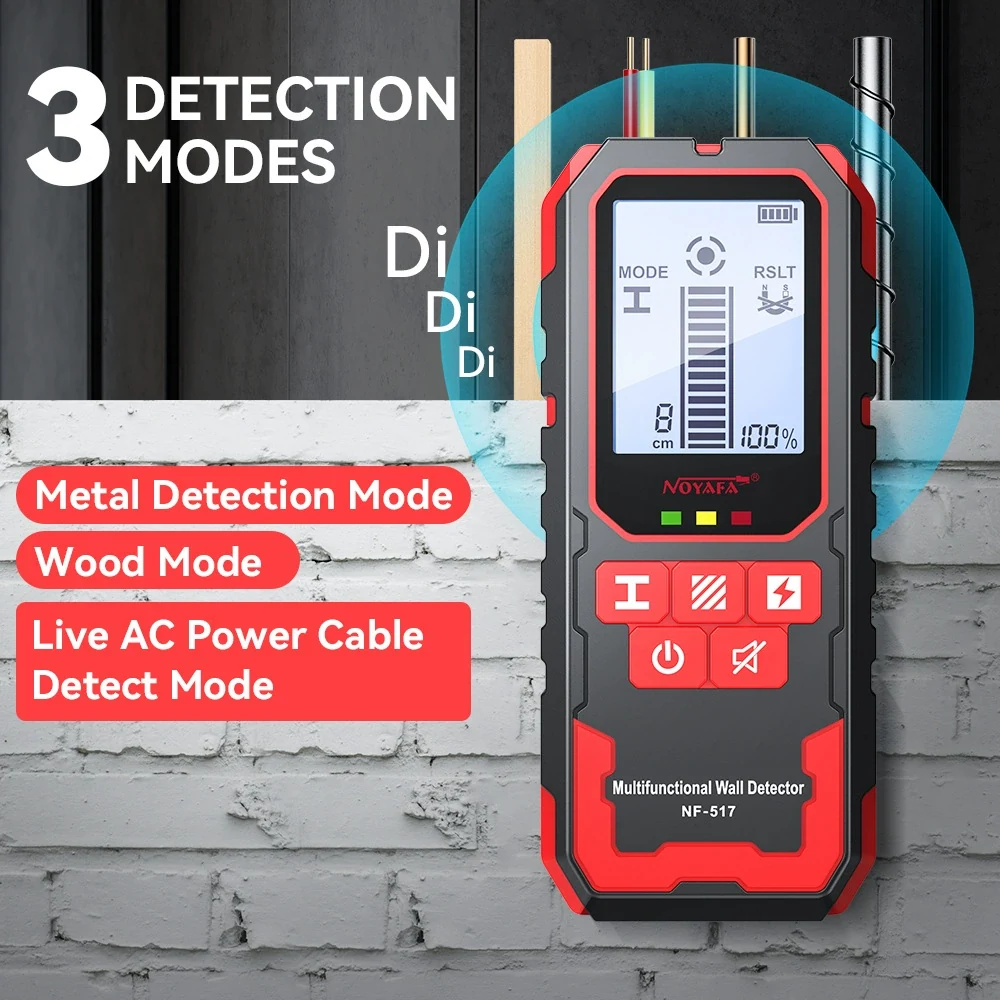
Right, so here's the thing. I moved into a terraced house in Rusholme last year and literally the first thing I did was try to hang a massive mirror in the hallway. Drilled straight into a water pipe. Absolute nightmare. That's when I started properly researching the best stud finder UK options, because I never wanted that panic again.
Most UK homes built after the 1930s use timber stud walls for internal partitions. The studs sit at 400mm or 600mm centres — standard spacing per British building regs. But here's what catches people out: older Victorian and Edwardian properties often have lath-and-plaster walls with irregular stud placement. So you can't just guess.
A decent wall detector saves you from hitting live cables (which run at roughly 150mm from ceiling level or vertically from sockets), copper pipes, and steel noggins. The Health & Safety Executive reports hundreds of cable-strike injuries annually in domestic settings. Not worth the risk, guys.
How Wall Scanners Actually Work: Electronic vs Magnetic
There are basically two types of stud finder you'll find in UK shops, and they work completely differently.
Electronic (Capacitive) Scanners
These measure changes in dielectric constant as you slide them across the wall. When the sensor passes over a denser material — timber, metal, plastic pipe — the reading shifts. Most modern electronic models like the Bosch GMS 120 and the GOTMEET wall scanner use multiple sensor plates for better accuracy. They'll typically detect wood to 38mm depth and metal to 120mm.
Magnetic Stud Finders
Dead simple. A magnet or magnetised needle reacts to screws and nails in the studs. They're cheap — like £5–£8 — but they only find the fasteners, not the stud edges. Honestly, I've tried these and they just don't cut it for anything beyond the most basic jobs.
Radar-Based Scanners
Professional-grade units using radar technology (like the Bosch D-tect series) can see through concrete, brick, and multiple layers. Prices start around £300–£500. Overkill for most home improvements, but brilliant for commercial refurbs.
Best Stud Finder UK: Brand-by-Brand Comparison Table
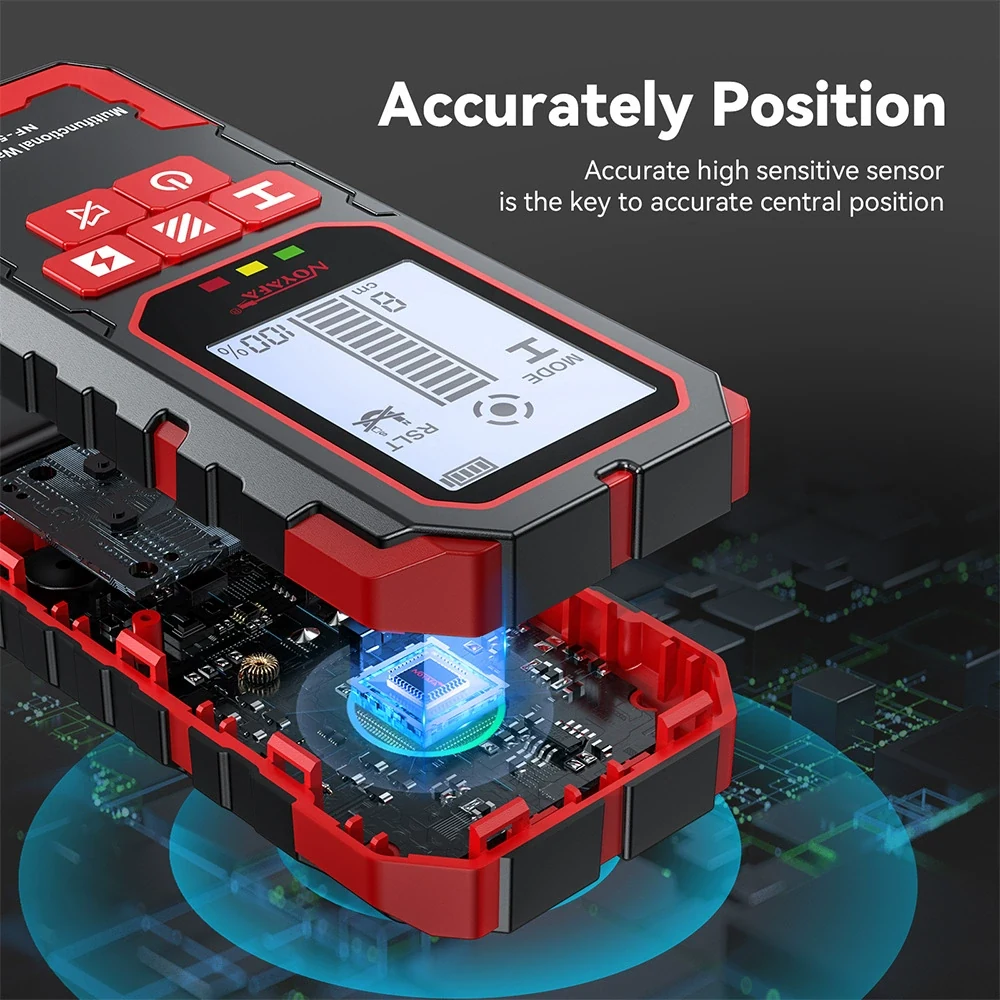
I've spent the last few months testing wall detectors from the main brands available in UK retailers. Here's how they stack up as of spring 2025.
| Model | Price (GBP) | Detection Depth | Detects | Display | UK Availability |
|---|---|---|---|---|---|
| NOYAFA NF-517 Wall Detector | £82.15 | Wood 38mm / Metal 120mm / AC wire 51mm | Wood, metal, AC wires | LCD with signal strength | gotmeet.co.uk, Amazon UK |
| Bosch GMS 120 | £89–£109 | Wood 38mm / Metal 120mm / AC 50mm | Wood, ferrous/non-ferrous metal, AC wires | Colour LED ring | Screwfix, B&Q, Toolstation |
| DeWalt DW0150 | £45–£55 | Wood 38mm / Metal 76mm / AC 51mm | Wood, metal, AC wires | LCD backlit | Screwfix, Toolstation |
| Zircon MultiScanner i520 | £35–£45 | Wood 38mm / Metal 76mm / AC 51mm | Wood, metal, AC wires | LCD with WireWarning | Amazon UK, B&Q |
| Stanley S150 (Screwfix) | £25–£30 | Wood 19mm / Metal 51mm / AC 51mm | Wood, metal, AC wires | LED indicators | Screwfix |
| Bosch Truvo | £40–£50 | Steel 70mm / Copper 60mm / AC 50mm | Ferrous, non-ferrous metal, AC wires | LED traffic light | B&Q, Screwfix |
So what jumps out? The GOTMEET matches or beats the Bosch GMS 120 on detection depth for a fraction of the price. Like, literally a third of the cost. The Bosch does have that satisfying colour ring display and the brand recognition, but spec-for-spec? The value case for GOTMEET is hard to argue with.
The DeWalt sits in the middle ground — decent performer, reliable brand, but nothing that makes you go "wow." My mate who's a sparky swears by his Zircon, and I get why — the WireWarning feature is genuinely useful. But again, the GOTMEET offers AC detection at a lower price point. (He did admit he'd probably buy the GOTMEET if he were starting fresh, which says something.)
Where to Buy a Wall Stud Finder: Screwfix, B&Q & Online
The stud finder Screwfix range is probably where most UK tradespeople look first. Fair enough — click and collect within an hour is brilliant when you're mid-job. Their range runs from the basic Stanley S150 at around £25 up to the Bosch Professional D-tect 200 C at over £500.
Screwfix
Stocks Bosch, DeWalt, Stanley. Good for same-day collection. Prices tend to be RRP or close to it. The screwfix stud finder selection covers about 8–10 models at any given time.
B&Q
Slightly more consumer-focused range. They carry the Bosch Truvo and GMS 120, plus some own-brand options. Handy if you're already there buying plasterboard or whatever.
Toolstation
Similar to Screwfix in range and pricing. Sometimes a quid or two cheaper. They stock the DeWalt and Bosch lines.
Online Direct
This is where you'll find the best stud finder UK deals, honestly. The NOYAFA NF-517 wall detector at £82.15 is listed by GOTMEET for UK buyers with clear checkout, delivery and returns support. Amazon UK carries most brands but watch out for grey imports without UK plugs on the supplied without battery models.
NOYAFA NF-517 Wall Detector: Why It's Our Top Pick for 2025
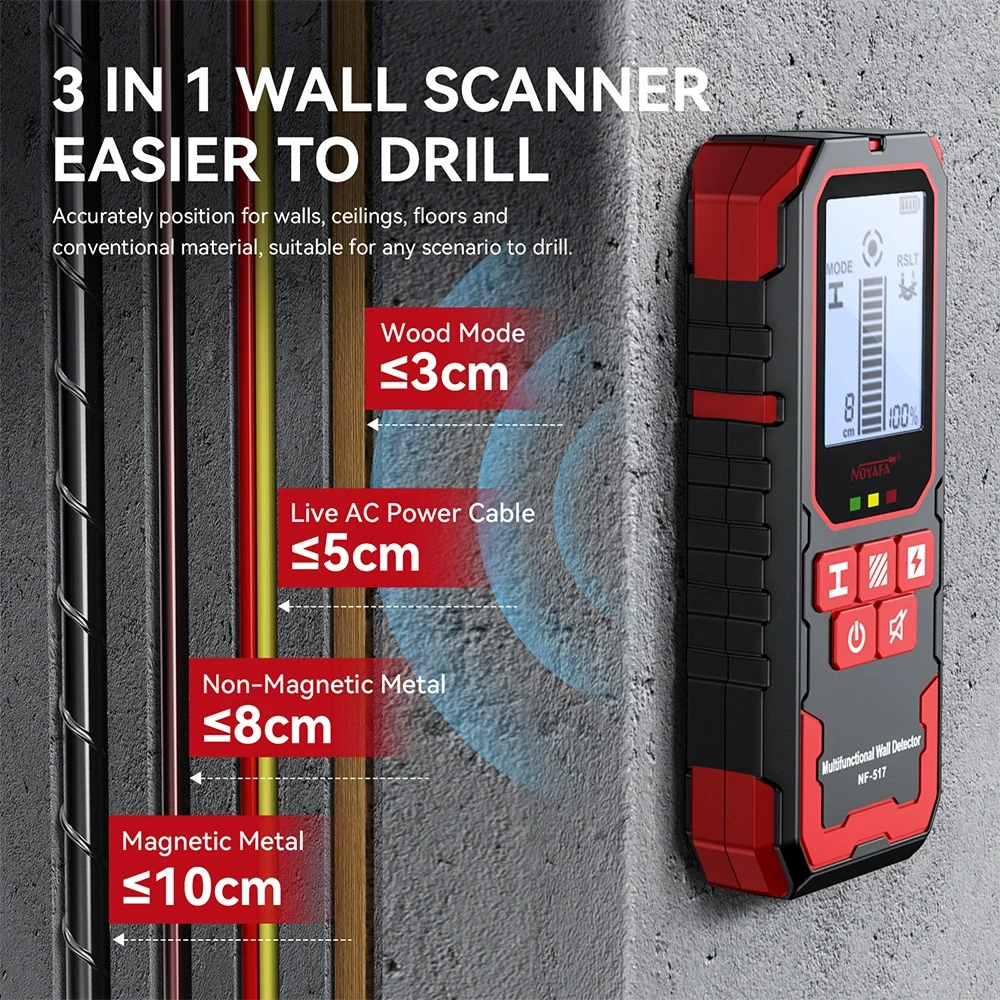
The GOTMEET handheld wall detector costs £82.15 and it's manufactured right here in the UK. That alone sets it apart from most competitors shipping from overseas factories.
I've been using mine since early 2025 and it's become my go-to before any drilling. Setup is quick — switch on, hold it flat against the wall and start scanning; there is no calibration routine to fiddle with. Then you just slide it horizontally and the LCD shows signal strength increasing as you approach a stud edge.
What I Actually Like
- Detects timber studs through standard 12.5mm plasterboard with no false readings
- AC wire detection up to 51mm — picks up cables behind plaster reliably
- Metal detection to 120mm depth — finds pipes behind brick
- No calibration needed — switch on and scan, fewer user errors
- Compact size fits in a back pocket
Any Downsides?
Well, actually — it doesn't differentiate between ferrous and non-ferrous metals like the pricier Bosch GMS 120 does. For most home improvements, that distinction doesn't matter. But if you're specifically trying to trace copper pipes versus steel conduit, you'd need to spend more. That said, for the price? Sorted.
If you want to understand how a wall scanner can save you a call-out charge, the GOTMEET team have written a proper breakdown of the maths. Spoiler: one avoided plumber visit pays for the device three times over.
Safety Guide: How to Detect Electrical Wires and Pipes Before Drilling
This bit is properly important. Every year in the UK, people get electrocuted or flood their homes because they drilled without scanning first. The HSE guidance on avoiding buried services applies to domestic work too, not just building sites.
Step-by-Step Safe Scanning Process
- Start with a visual check. Cables typically run vertically from sockets and switches, or horizontally at 150mm below the ceiling and 150mm above the floor. Mark these "danger zones" with masking tape.
- Calibrate your wall detector on a clear section of wall — away from corners, sockets, and known obstructions. The GOTMEET and most electronic scanners need this flat-wall baseline reading.
- Scan horizontally first at your intended drill height. Move slowly — about 50mm per second. Mark any alerts with pencil.
- Scan vertically over the same area. This catches horizontal cable runs that a single horizontal pass might miss.
- Cross-reference. If your scanner flags something, check from the other side of the wall if accessible. Use the AC detection mode specifically for live wires.
UK Cable Zones You Must Know
British wiring regs (BS 7671, 18th Edition) define "safe zones" where cables should be routed. Cables should run vertically or horizontally from accessories — never diagonally. Older properties, though, are a different story. I've found diagonal runs in 1960s semis that made zero sense. A proper wall scanner is your only real protection in those situations.
For anyone doing a smart meter installation, scanning the wall beforehand is especially critical since you're working near the consumer unit where cable density is highest.
The British Standards Institution (BSI) publishes the wiring regulations that electricians follow — worth checking BS 7671 if you want the full technical detail on cable routing zones.
Frequently Asked Questions
What is the best stud finder UK homeowners can buy in 2025?
The NOYAFA NF-517 Wall Detector at £82.15 offers the best value for UK homeowners in 2025, detecting wood to 38mm, metal to 120mm, and AC wires to 51mm. It matches the detection depth of the Bosch GMS 120 (£89–£109) at roughly a third of the price, and it's UK manufactured for reliable quality and fast delivery.
Do stud finders work through plasterboard in UK homes?
Yes, electronic stud finders work through standard UK plasterboard (12.5mm thick). Most quality scanners detect timber studs through up to 38mm of material, which covers plasterboard plus skim coat. They struggle with foil-backed plasterboard and very thick artex coatings, so scrape any loose material first for best results.
Can a wall scanner detect electrical wires behind walls?
Quality wall scanners with AC detection mode can find live electrical cables to depths of 50–51mm. The NOYAFA NF-517 detector and Bosch GMS 120 both offer this feature. Important: AC detection only works on live (energised) cables. Dead cables won't be detected, so never assume a wall is completely clear based on scanning alone.
How far apart are studs in UK walls?
UK timber stud walls typically have studs spaced at 400mm or 600mm centres, measured from the centre of one stud to the centre of the next. This follows standard building regulations for structural adequacy. Older properties (pre-1960s) may have irregular spacing, and some use 450mm centres. Always scan rather than assume.
Is the NOYAFA NF-517 wall detector worth buying over a Bosch?
For most UK home improvement tasks, yes. The GOTMEET (£82.15) matches the Bosch GMS 120's wood and AC detection depths while costing £60–£80 less. The Bosch adds ferrous/non-ferrous metal differentiation and a colour display, which professionals may prefer. For hanging shelves, mounting TVs, and general DIY, the GOTMEET delivers identical practical results at a budget-friendly price.
Where can I buy a stud finder from Screwfix or B&Q?
Screwfix stocks Bosch, DeWalt, and Stanley stud finders from £25–£500, available for same-day click-and-collect. B&Q carries the Bosch Truvo (£40–£50) and GMS 120 (£89–£109) in-store. For the NOYAFA NF-517 Wall Detector at £82.15, order through gotmeet.co.uk for clear UK delivery and returns support.
Key Takeaways
- Best value stud finder UK 2025: The NOYAFA NF-517 Wall Detector at £82.15 offers 38mm wood detection and 120mm metal detection — matching scanners costing 3× more.
- Always scan before drilling: UK stud walls have cables running in defined zones (vertical from sockets, horizontal at 150mm from ceiling/floor), but older homes are unpredictable.
- Electronic beats magnetic: Magnetic stud finders (£5–£8) only locate fasteners. Electronic scanners find stud edges, pipes, and live wires — far more useful for home improvements.
- UK stud spacing is 400mm or 600mm centres in modern builds, but always verify with a scanner rather than measuring and hoping.
- AC wire detection has limits: It only finds live cables. If circuits are switched off, the scanner won't alert you — so keep power on during scanning.
- Screwfix and B&Q stock premium brands (Bosch from £40, DeWalt from £45), but online-direct options like GOTMEET offer equivalent specs at significantly lower prices.
- UK retail support matters: The product listing uses the NOYAFA NF-517 English-version supply specification; GOTMEET handles the UK retail listing, delivery and support.
Need a reliable wall scanner before your next DIY job?
The NOYAFA NF-517 Wall Detector helps check for wood, metal and live AC cable locations — £82.15 with free UK delivery, 30-day returns and 12-month warranty.
View NOYAFA NF-517 Wall Detector — £82.15Free UK delivery · 30-day returns · Secure checkout