How to Find Wires in Wall Before Drilling UK
To find wires in wall before drilling in the UK, scan the area with an electronic wall detector in AC mode, check the BS 7671 safe zones (straight up and across from sockets and switches), and keep the power on so live cables show up. This is the exact first-time-homeowner routine below — the three-minute check to run before you hang a TV or mirror.
Why Scanning Your Walls Matters
Right, so here's the thing. Every year in the UK, thousands of people hit hidden cables or pipes while doing basic home improvements. I'm talking about hanging shelves, mounting TVs, fitting curtain rails — stuff that should be dead simple. The Health & Safety Executive (HSE) reports that contact with underground or hidden services remains one of the top causes of electrical injuries in domestic and commercial settings.
Knowing how to find wires in wall before drilling UK properties is non-negotiable if you value your fingers. And your life, obviously.
I learned this the hard way in my second year at uni. Was trying to put up a floating shelf in my Rusholme flat — no scanner, just vibes and a prayer. Hit a cable. Tripped the whole building's RCD. My housemates were not impressed. So yeah, that's when I started properly researching wall scanners and stud finders, and honestly? It's become a bit of an obsession.
What's Actually Hiding Behind Your Plasterboard?
In a typical UK home, you'll find:
- Electrical cables — ring mains, lighting circuits, spur connections
- Copper or plastic water pipes — both hot and cold supply
- Gas pipes — particularly in kitchens and near boilers
- Timber or metal studs — the structural framework behind plasterboard
- Steel joists and RSJs — in converted or modern properties
A decent wall detector will identify most of these. A rubbish one won't. Simple as that.
How Digital Wall Detectors Actually Work
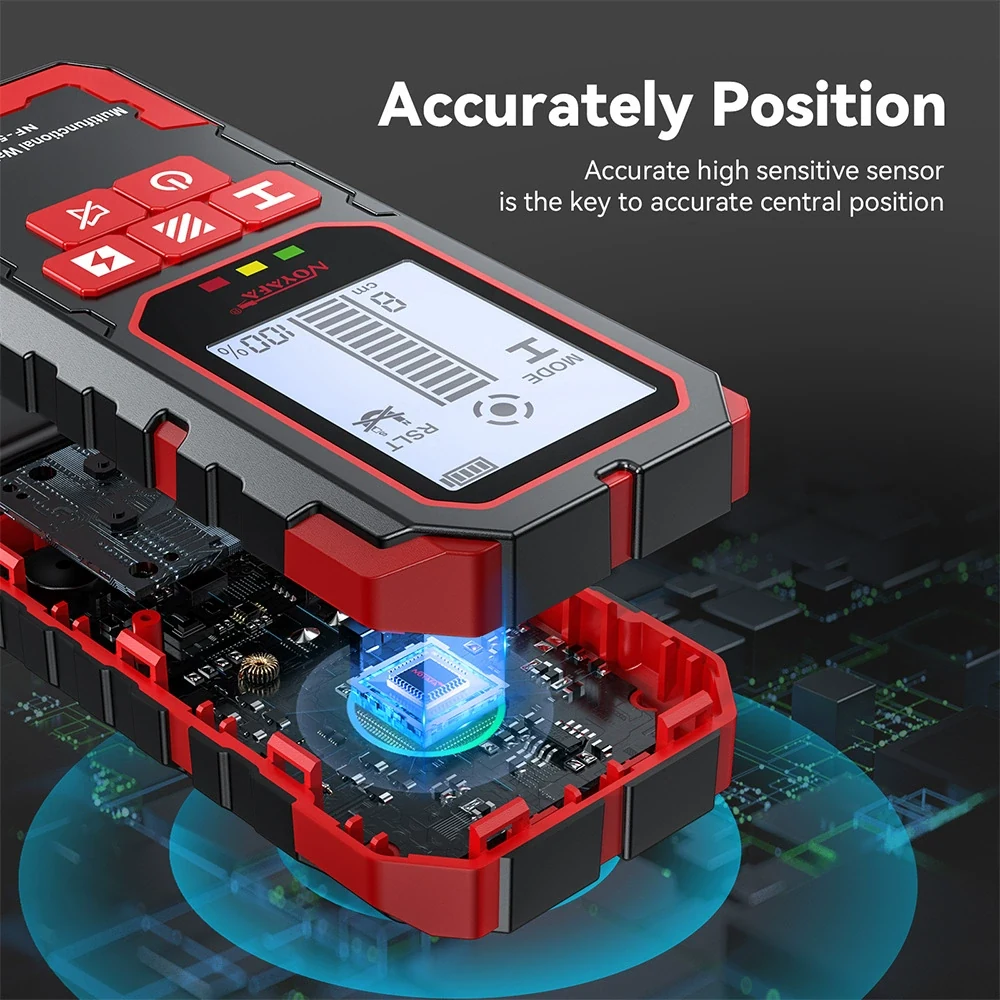
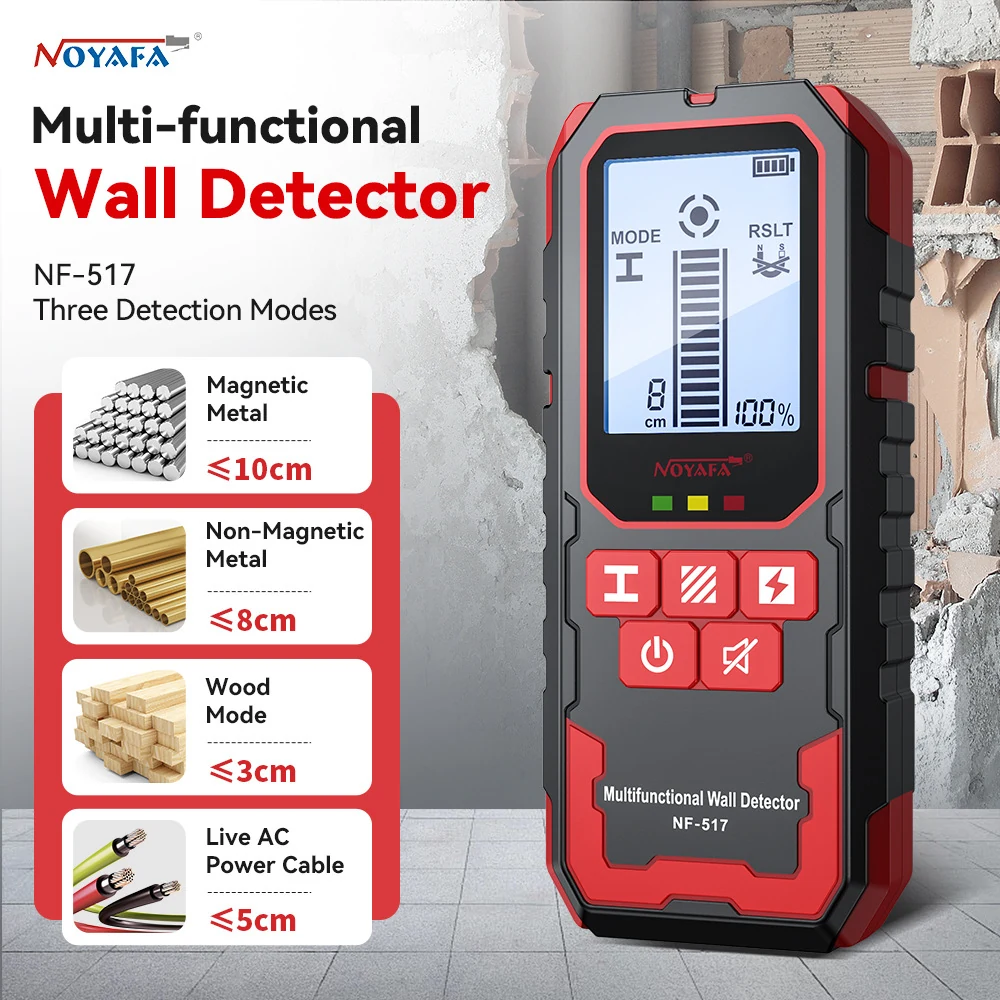
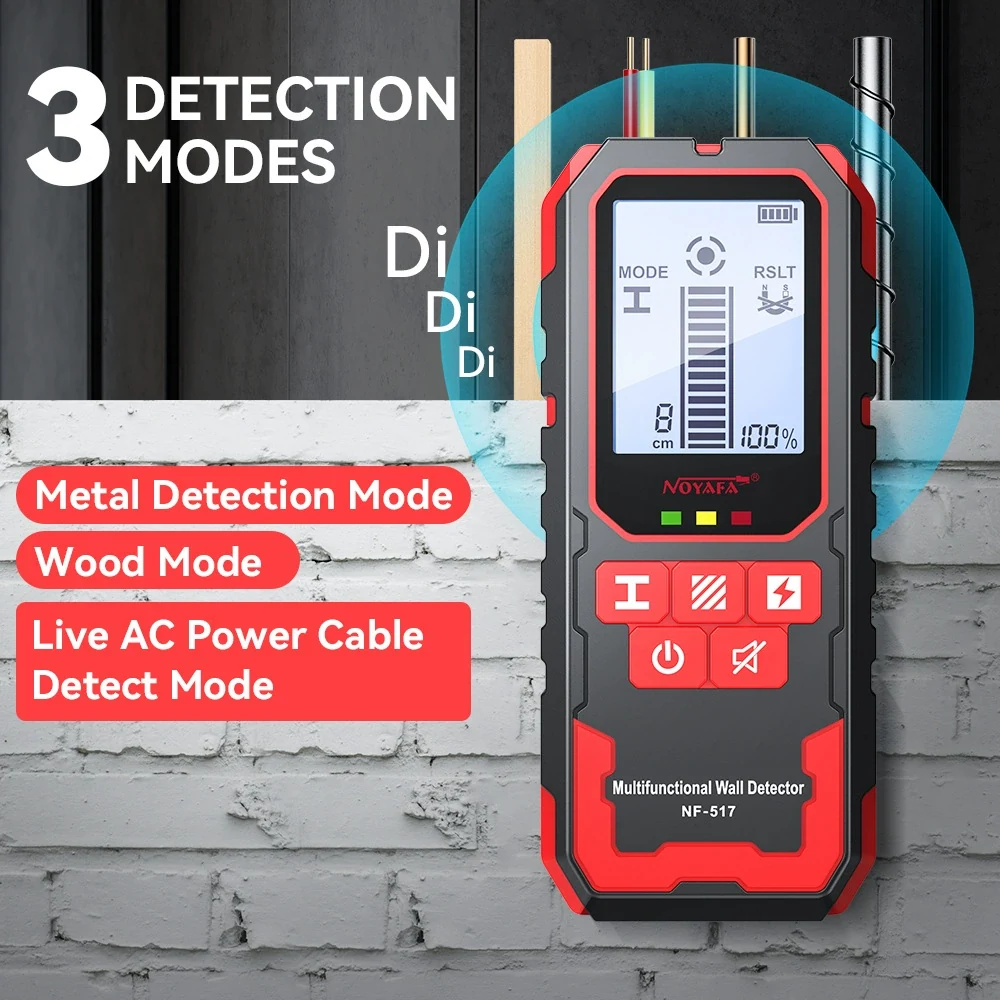
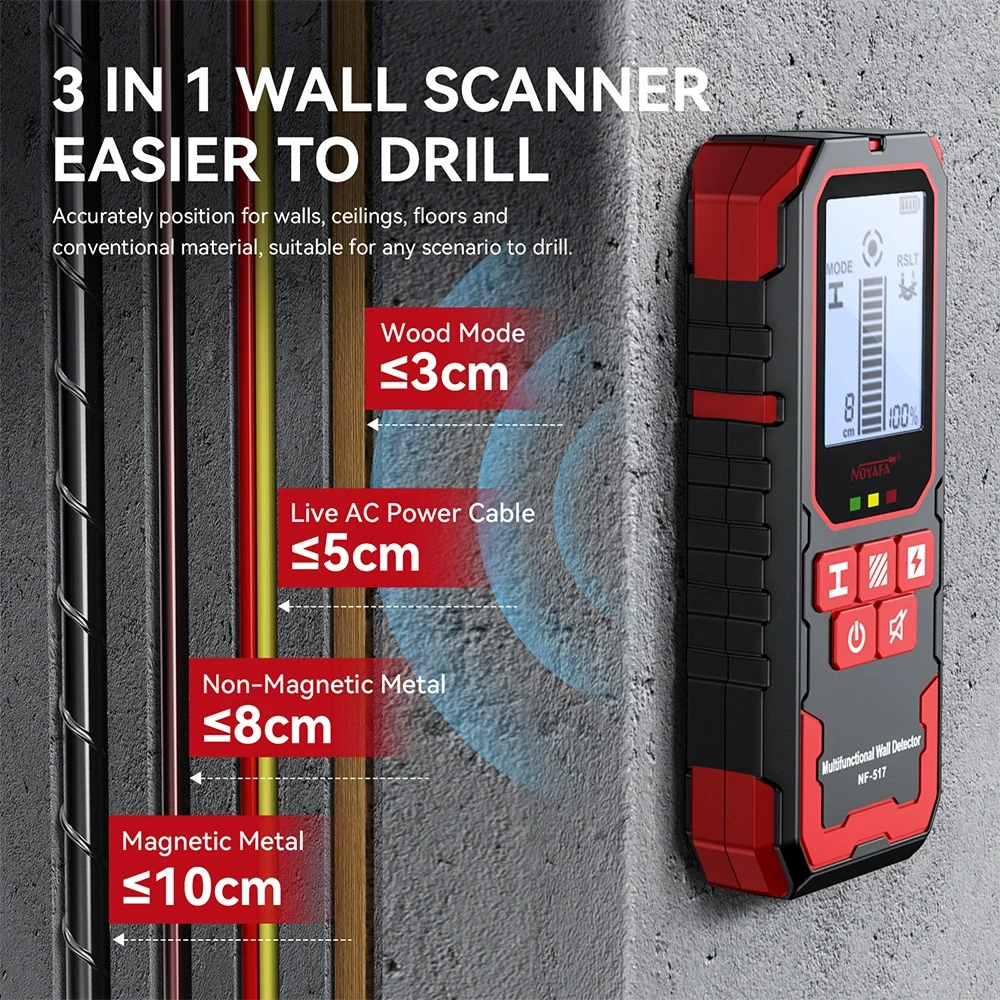
Digital wall scanners use a combination of sensing technologies to detect what's behind your walls. Most modern units — including the NOYAFA NF-517 Wall Detector Handheld at £82.15 — combine multiple detection modes in a single device.
The Three Core Detection Methods
Capacitive sensing detects changes in the wall's dielectric constant. When the sensor passes over a stud, pipe, or cable, the density change alters the capacitance reading. This is how most stud finder UK models locate timber framing.
Live wire detection (AC sensing) picks up the electromagnetic field generated by live electrical cables. Range varies massively between models — cheap ones detect to about 38mm depth, while better units like the GOTMEET reach up to 50mm in AC wire mode.
Metal detection uses eddy current principles to find ferrous and non-ferrous metals. Copper pipes, steel studs, reinforcement bars — all show up on this mode. The best stud finder models distinguish between ferrous and non-ferrous metals, which is genuinely useful when you're trying to work out if you've found a pipe or a nail.
Why "Multi-Mode" Matters
Here's something that took me ages to figure out. No single detection mode catches everything. A live wire detector won't find a cable that's switched off at the consumer unit. A metal detector won't find plastic water pipes. You need to scan in multiple modes and cross-reference — that's what separates a proper wall scanner from a basic stud wall finder.
Step-by-Step: How to Find Wires in Wall Before Drilling UK Walls Safely
This is the process I use every single time now. Takes about 5 minutes per drill point. Worth it to avoid a £200+ electrician call-out — or worse, a trip to A&E.
Step 1: Prepare the Wall Surface
Remove any metallic objects near the scan area. Picture hooks, foil-backed insulation visible at edges, even thick metallic paint can throw off readings. The wall surface needs to be dry — moisture causes false positives on capacitive sensors. If you've just plastered, wait at least 48 hours.
Step 2: Calibrate Your Scanner
Hold the device flat against the wall in an area you're fairly confident is clear (middle of a large wall section, away from sockets and switches). Press the calibration button. Most units — including the GOTMEET handheld wall detector — auto-calibrate in 2-3 seconds. The screen should show a clear "ready" state.
Step 3: Scan in AC Wire Mode First
This is your safety pass. Slowly move the scanner horizontally across your intended drill area. Speed matters — no faster than 10cm per second. The GOTMEET detects live AC wires up to 50mm deep. If you get a hit, mark it with painter's tape. Do NOT drill within 150mm of any detected cable.
Step 4: Switch to Metal Detection Mode
Now scan the same area for pipes and metal studs. Copper pipes typically register at 40-50mm depth on a decent scanner. Mark any findings with different coloured tape.
Step 5: Run a Stud Finder Pass
Finally, scan for timber studs and general density changes. This tells you where the solid fixing points are — and where the hollow sections sit. If you're mounting anything heavy, you want to hit a stud anyway.
Step 6: Cross-Reference with Safe Zones
UK wiring regulations (BS 7671) state that cables should run vertically or horizontally from sockets, switches, and ceiling roses. So if your scanner shows nothing but you're within 150mm of a socket's vertical or horizontal line — don't drill there anyway. Belt and braces, like.
If you want to avoid a call-out charge with a wall scanner, this six-step process is genuinely all you need for most domestic jobs.
Bosch Wall Scanner vs Handheld Wall Detector UK: Which Performs Better?
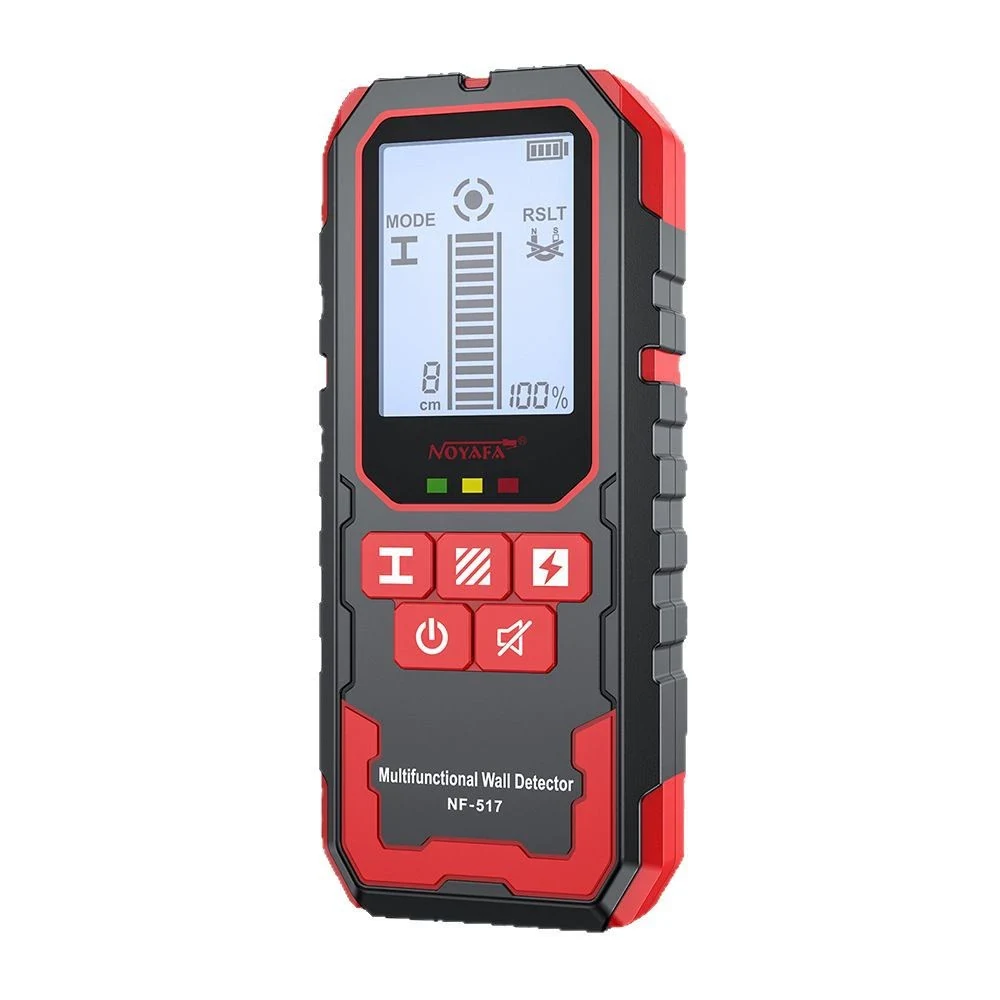
Right, the comparison everyone asks about. The Bosch stud finder range (particularly the GMS 120 and Truvo models) has been the go-to for years. They're stocked at Screwfix, Toolstation, everywhere. But are they actually the best option in 2026? It depends what you're doing.
| Feature | Bosch GMS 120 | Bosch Truvo | NOYAFA NF-517 Wall Detector Handheld |
|---|---|---|---|
| Price (Jan 2026) | ~£90-£110 | ~£40-£50 | £82.15 |
| Live wire detection depth | 50mm | 50mm | 50mm |
| Metal detection depth | 120mm (ferrous) | 70mm | 50mm |
| Wood/stud detection | 38mm | No | Yes — up to 38mm |
| Display type | LED ring + LCD | LED traffic light | LCD digital display |
| Modes | 3 (metal, wire, wood) | 1 (auto) | Multiple (AC, metal, stud) |
| UK manufactured | No (Germany) | No (Malaysia) | Yes — UK made |
| Weight | 270g | 150g | Lightweight handheld |
| Available at Screwfix | Yes | Yes | Via gotmeet.co.uk |
So what's the catch? The Bosch GMS 120 is brilliant for deep metal detection — 120mm for ferrous metals is class-leading. If you're a professional dealing with steel-framed buildings or deep-set reinforcement, it's worth the premium. But for the vast majority of domestic work — hanging shelves, mounting TVs, fitting blinds — you don't need 120mm metal depth. You need reliable live wire detection and stud finding at standard plasterboard depths (12.5mm to 25mm board thickness).
The NOYAFA NF-517 wall detector at £82.15 matches the Bosch on AC wire detection depth (50mm) and includes stud finding that the mid-range Bosch Truvo doesn't even offer. For home improvements on a budget, it's decent bang for your buck.
My mate who does property maintenance across South swears by having both — the GOTMEET for quick daily checks and a Bosch GMS 120 for the tricky commercial jobs. That said, if you're buying one scanner for general use, the price difference is hard to ignore.
Choosing the Best Stud Finder UK: What Actually Matters
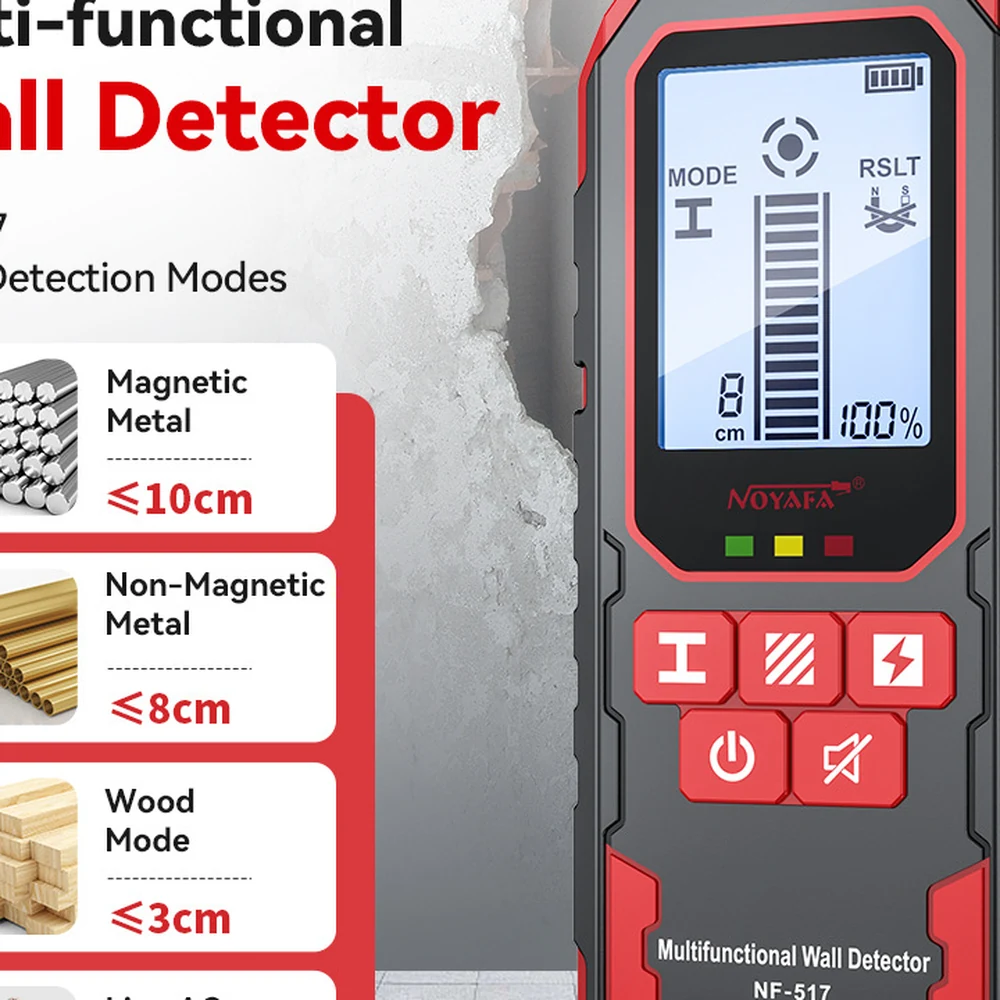
The stud finder market in the UK is honestly a bit overwhelming right now. You've got everything from £8 magnetic stud finders to £300+ professional units. Here's what I'd focus on after testing a fair few this spring.
Detection Depth vs Accuracy
Deeper isn't always better. A scanner claiming 150mm depth but with ±20mm accuracy is less useful than one detecting to 50mm with ±5mm precision. For UK residential walls — typically 12.5mm plasterboard on timber studs at 400mm or 600mm centres — you need reliable detection to about 40-50mm. That covers the board plus any skim coat.
Live Wire Detection is Non-Negotiable
Any stud finder you buy in 2026 should include AC wire detection. Full stop. The Screwfix stud finder options mostly include this now, but double-check before purchasing. A basic magnetic stud finder won't detect cables at all — it only finds nails and screws in studs.
Display Quality
LED-only indicators (like the Bosch Truvo's traffic light system) give you a yes/no answer. LCD screens with signal strength bars give you much more information — you can see how deep something is and how confident the reading is. The GOTMEET's digital display shows exactly what's been detected and at what intensity. (Sounds like a small thing until you're up a ladder trying to interpret a single flashing light.)
Who's It For?
If you're doing a smart meter install or any work near your consumer unit, you want the best wall scanner you can get. For occasional shelf-hanging, a solid mid-range unit does the job. The key thing is actually using it — I know too many people who own a stud finder and leave it in the drawer because "it'll be fine."
It won't always be fine. Trust me on that one.
Common Mistakes That Catch People Out
After spending way too much time on home improvement forums and Reddit threads, these are the errors I see constantly.
Scanning Too Fast
The sensor needs time to register changes. Move at roughly 10cm per second — about the speed you'd spread butter on toast. Faster than that and you'll miss shallow cables entirely.
Not Calibrating on Each New Wall
Different wall constructions (solid brick, plasterboard on dabs, lath and plaster) need different calibration baselines. Recalibrate every time you move to a new wall. Every. Single. Time.
Ignoring the "Safe Zones" Rule
Even with a scanner showing all-clear, the British Standards Institution (BSI) wiring regulations assume cables run in predictable routes. Directly above or below sockets. Horizontally from switches at their mounting height. If your scanner says clear but you're in a danger zone — use a shorter fixing or find another spot.
Relying on One Pass Only
Scan horizontally AND vertically. Cables running parallel to your scan direction can slip between sensor readings. Two passes at 90 degrees to each other catches everything.
Using a Dead Battery
Sounds obvious, right? But low battery voltage reduces detection sensitivity. If your wall detector has been sitting in a toolbox for six months, pop fresh batteries in before you trust it with your safety. The GOTMEET uses standard batteries — no proprietary cells or charging faff.
Frequently Asked Questions
How deep can a wall scanner detect wires in UK homes?
Most quality wall scanners detect live AC wires to 50mm depth, which covers standard UK plasterboard (12.5mm) plus plaster skim and any cable routing depth. The NOYAFA NF-517 Wall Detector Handheld achieves 50mm AC detection at £82.15. Budget models under £15 typically only manage 25-38mm, which may miss cables in older properties with thicker plaster coats.
Can a stud finder detect wires that are switched off?
No — AC wire detection only works on live, energised cables because it senses the electromagnetic field. Cables switched off at the consumer unit won't register. This is why you should also use metal detection mode, which finds copper conductors regardless of whether they're live. Always scan in both modes for complete coverage.
Is the Bosch stud finder worth the extra money over budget alternatives?
The Bosch GMS 120 (£90-£110) offers deeper ferrous metal detection at 120mm, making it valuable for commercial work with steel framing. For standard domestic tasks — locating wires and studs in plasterboard walls — a well-designed alternative like the GOTMEET (£82.15) matches Bosch's AC detection depth at 50mm while costing 70% less. For most home improvements, the budget option performs equally well.
Where do wires typically run in UK walls?
Under BS 7671 wiring regulations, cables should run vertically from sockets and horizontally from switches at their mounted height. They also run horizontally along ceiling lines and above skirting boards within 150mm. However, pre-1970s properties often have diagonal cable runs that don't follow modern standards — making a wall scanner essential rather than optional.
How to find wires in wall before drilling UK rental properties?
The same scanning process applies to rentals, but you should also check with your landlord for any electrical layout documentation. Use a multi-mode wall detector scanning at 50mm depth minimum. In older rental stock (common in cities like and ), expect non-standard cable routes. The £82.15 GOTMEET scanner is a worthwhile investment even for tenants — far cheaper than losing your deposit to wall damage.
Do I need a wall scanner for every drill hole?
Yes. Every single one. A cable at 230V sits as shallow as 10mm in some UK walls. Scanning takes 30 seconds per drill point. The HSE recommends scanning before any penetration of wall, floor, or ceiling surfaces. Even if you drilled successfully 50mm to the left, cables can change direction — particularly at junction boxes hidden behind plasterboard.
Key Takeaways
- Always scan before drilling — UK mains at 230V can kill, and cables sit as shallow as 10mm beneath plaster surfaces.
- Use multiple detection modes — AC wire mode catches live cables; metal mode finds pipes and dead cables; stud mode locates timber framing.
- The NOYAFA NF-517 Wall Detector Handheld (£82.15, UK-manufactured) matches premium scanners on AC wire detection depth at 50mm while costing significantly less than the Bosch GMS 120.
- Scan slowly — no faster than 10cm per second — and always make two passes at 90 degrees to each other.
- Recalibrate on every new wall surface — different constructions (brick, plasterboard, lath and plaster) need fresh baseline readings.
- Follow BS 7671 safe zone rules even when your scanner shows clear — cables should run vertically from sockets and horizontally from switches.
- For 2026 home improvements, a quality digital wall detector is the single most important safety purchase under £30 you can make.
Need a reliable wall scanner before your next DIY job?
The NOYAFA NF-517 Wall Detector helps check for wood, metal and live AC cable locations — £82.15 with free UK delivery, 30-day returns and 12-month warranty.
View NOYAFA NF-517 Wall Detector — £82.15Free UK delivery · 30-day returns · Secure checkout