Stanley Stud Finder vs GOTMEET: Which Wall Scanner Wins?
A Stanley stud finder is one of the cheapest ways into electronic wall scanning in the UK, but after a drill hits a pipe or cable once, most people want to know it will not happen again. This guide compares Stanley against the NOYAFA NF-517 wall detector on configuration, safe use boundaries and value, so you can pick the tool you will actually trust before the next hole.
Why UK Walls Make Stud Finding Harder Than You'd Think
Most wall stud finders are designed for North American drywall. Thin sheet, timber frame, predictable spacing at 16 inches. Dead simple. But UK homes? Completely different story.
I live in a student house in Rusholme — like, proper Victorian terrace — and the walls are literally a nightmare mix of lath and plaster, random brick partitions, and the odd bit of modern plasterboard where someone's bodged a renovation. My housemate tried using a basic stud wall finder from Screwfix last year and it just beeped constantly. Useless.
Here's the thing: around 38% of UK housing stock was built before 1946, according to GOV.UK housing data. That means millions of homes have lath and plaster walls ranging from 25mm to 40mm thick, with irregular stud spacing anywhere between 350mm and 600mm. A stanley stud finder designed for uniform 12.5mm plasterboard will struggle with that kind of variation.
Common UK Wall Types and Their Challenges
Plasterboard on timber frame — the easy one. 12.5mm board, studs at 400mm or 600mm centres. Most detectors handle this fine.
Lath and plaster — the tricky one. Multiple layers of lime plaster over thin wooden laths nailed to studs. Total thickness can hit 35-40mm. The laths themselves create false readings because they're wood too. Cheap detectors basically can't tell the difference between a lath and an actual stud. (If you've ever drilled confidently into what you thought was a stud and hit nothing but dust, you'll know exactly what I mean.)
Dot and dab plasterboard — increasingly common in post-2000 builds. Plasterboard stuck directly to masonry with adhesive blobs. There are no studs at all, but the air gap behind the board (typically 10-25mm) confuses sensors that expect solid contact.
Stanley Stud Finder: What You Actually Get
Stanley's been making tools since 1843. The name carries weight. But does brand heritage translate to performance on British walls?
The Stanley range includes several models, from the basic S50 edge-finder (around £15-20) up to the S300 with multi-material detection (around £35-45). The S150 sits in the middle at roughly £25-30 and is probably the most commonly purchased stanley stud finder at places like Screwfix.
Stanley S150 Specs
- Detection depth: up to 38mm for wood, 51mm for metal
- Single scan mode with LED indicators
- Auto-calibration on flat surfaces
- Requires 9V battery
- Weight: approximately 150g
Honestly? For standard plasterboard walls, the S150 does a decent job. It's straightforward, the build quality feels solid (it's Stanley, after all), and the LED system is clear enough. But — and this is a big but — it really struggles with anything over 25mm wall thickness. On my mate's 1930s semi in Fallowfield, it gave inconsistent readings on the original plaster walls. We had to resort to the old "knock and listen" method, which isn't exactly precision engineering.
The S300 handles multiple materials better, detecting live AC wires up to 51mm deep. That's genuinely useful for safety. HSE guidelines on avoiding buried services recommend scanning before any drilling, and the S300 does tick that box.
NOYAFA NF-517 Wall Detector: UK-Designed for UK Walls
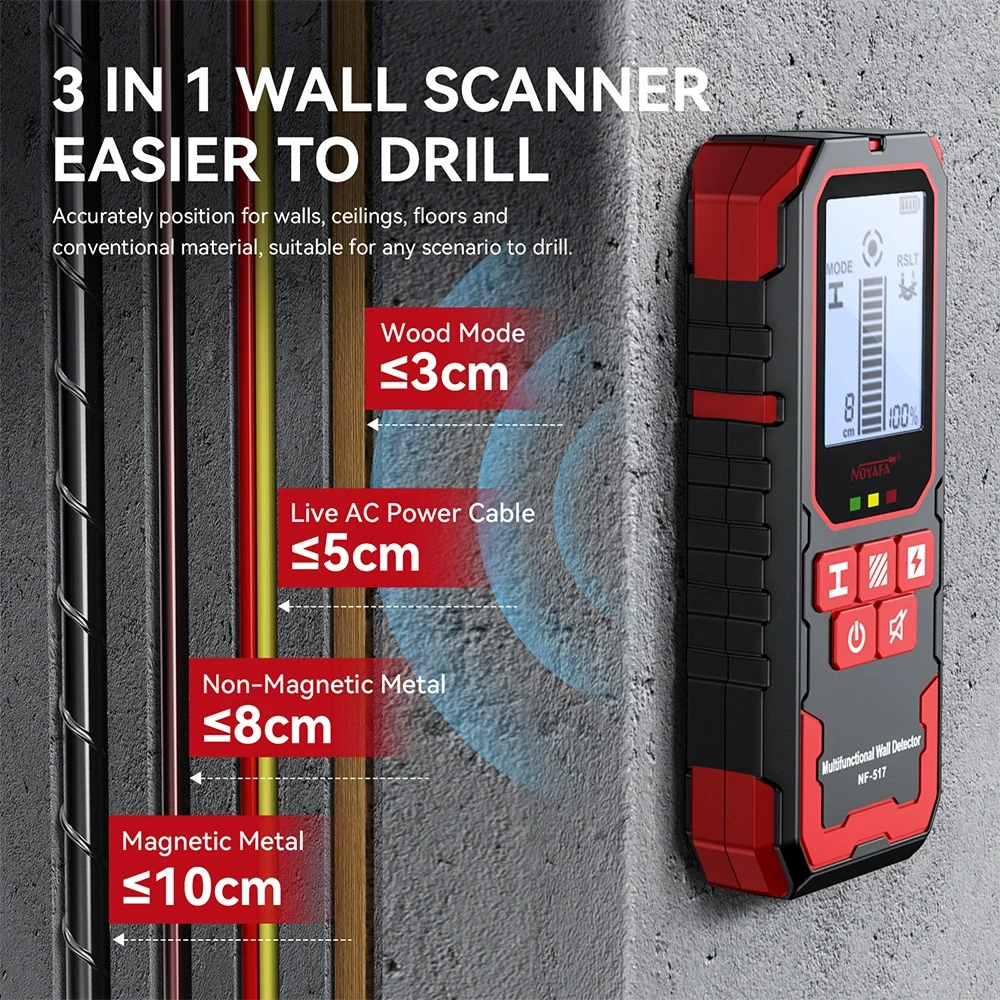
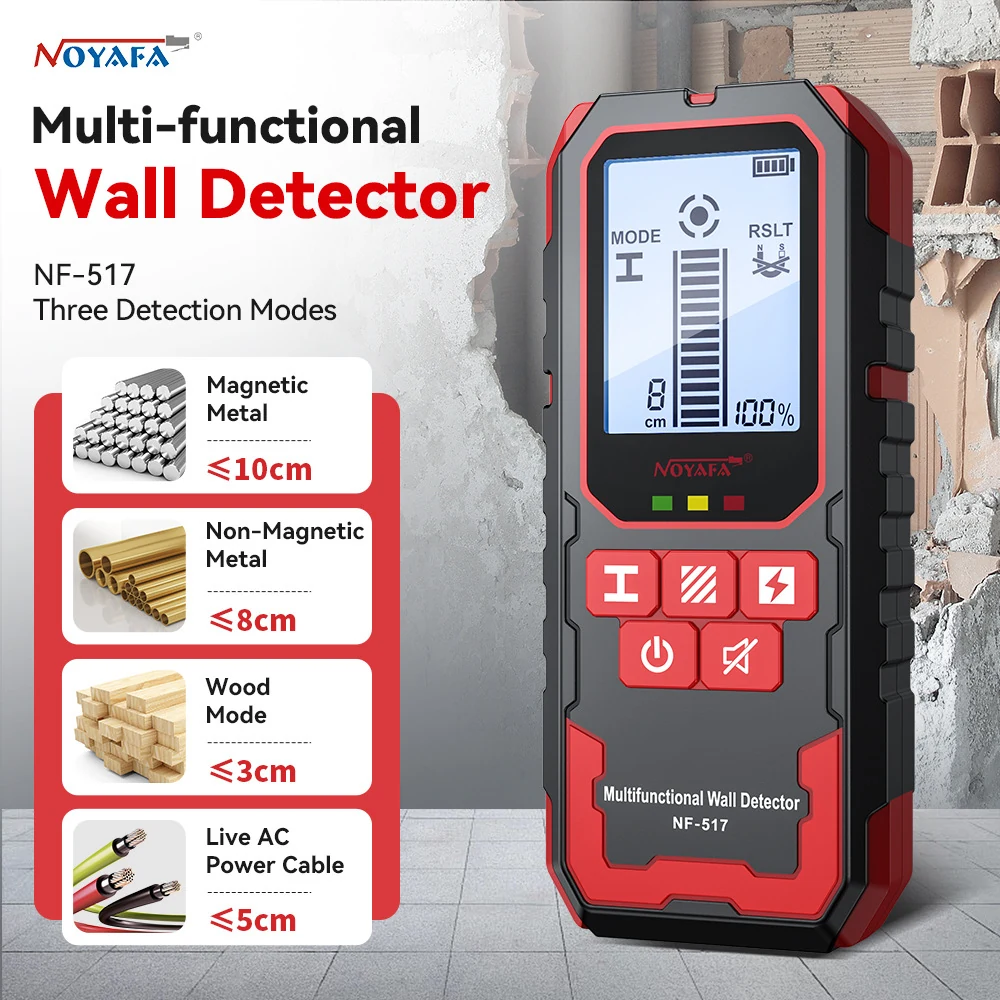
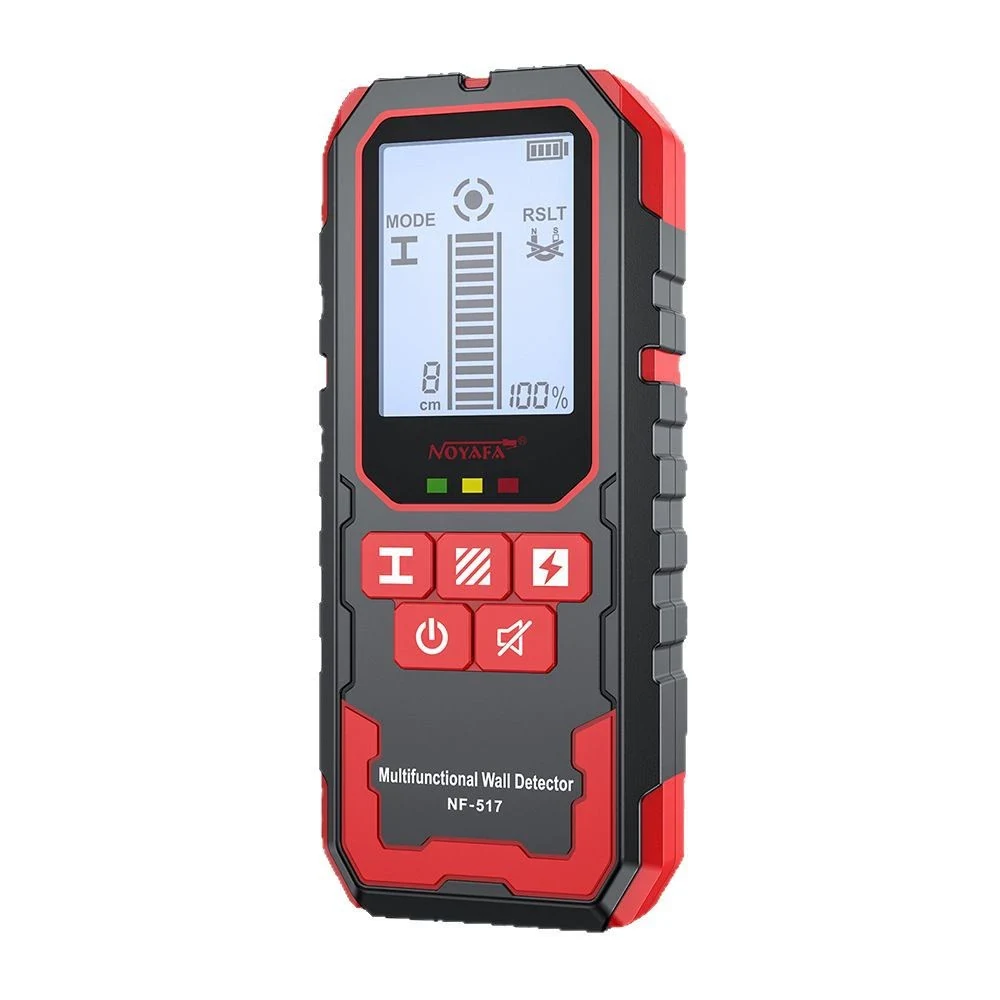
The NOYAFA NF-517 Wall Detector costs £82.15 and is prepared for UK retail. That's the headline. But what actually matters is whether it performs better on the wall types we've just discussed.
Gotmeet designed this scanner specifically for the British market. That sounds like marketing fluff, but it genuinely shows in the calibration. The device accounts for thicker wall coverings and irregular substrates that are standard in UK properties. I picked one up this spring after seeing it recommended in a DIY group, and I was properly sceptical at first. Another wall scanner making big claims?
NOYAFA NF-517 Wall Detector Specs
- Price: £82.15
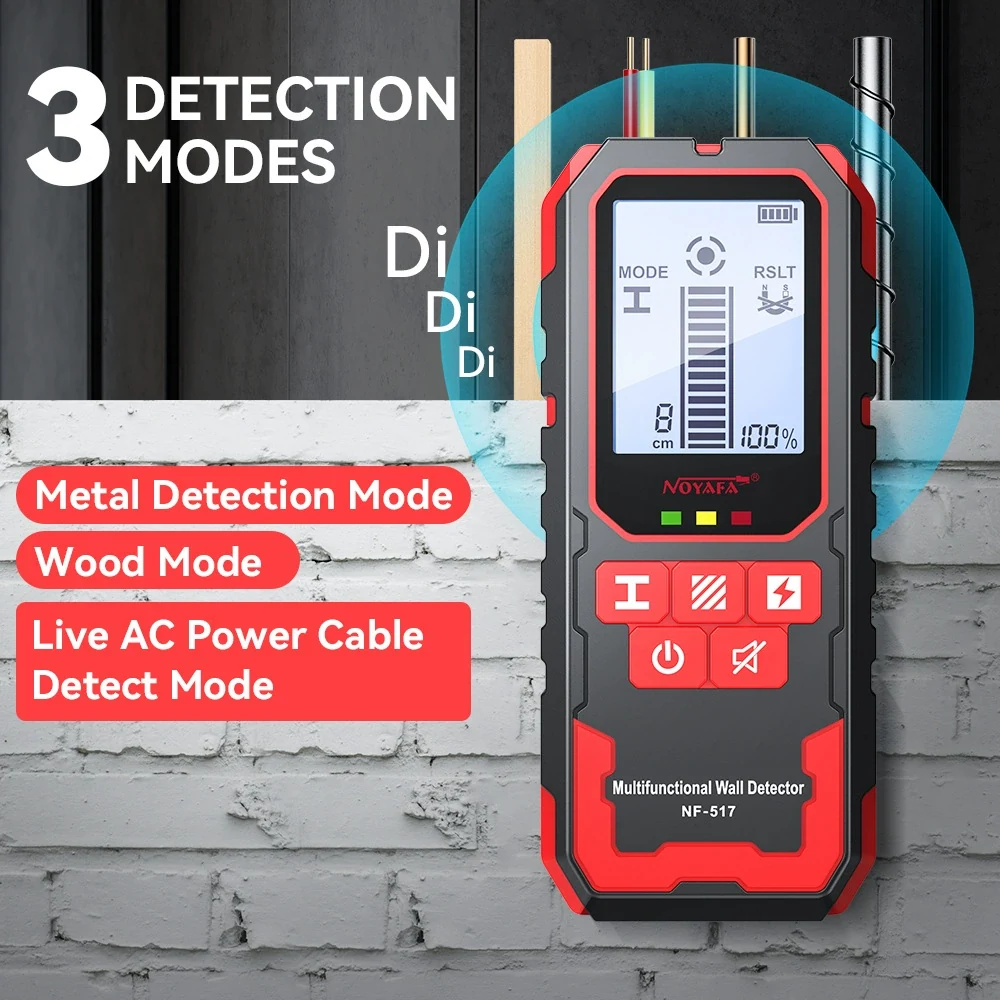
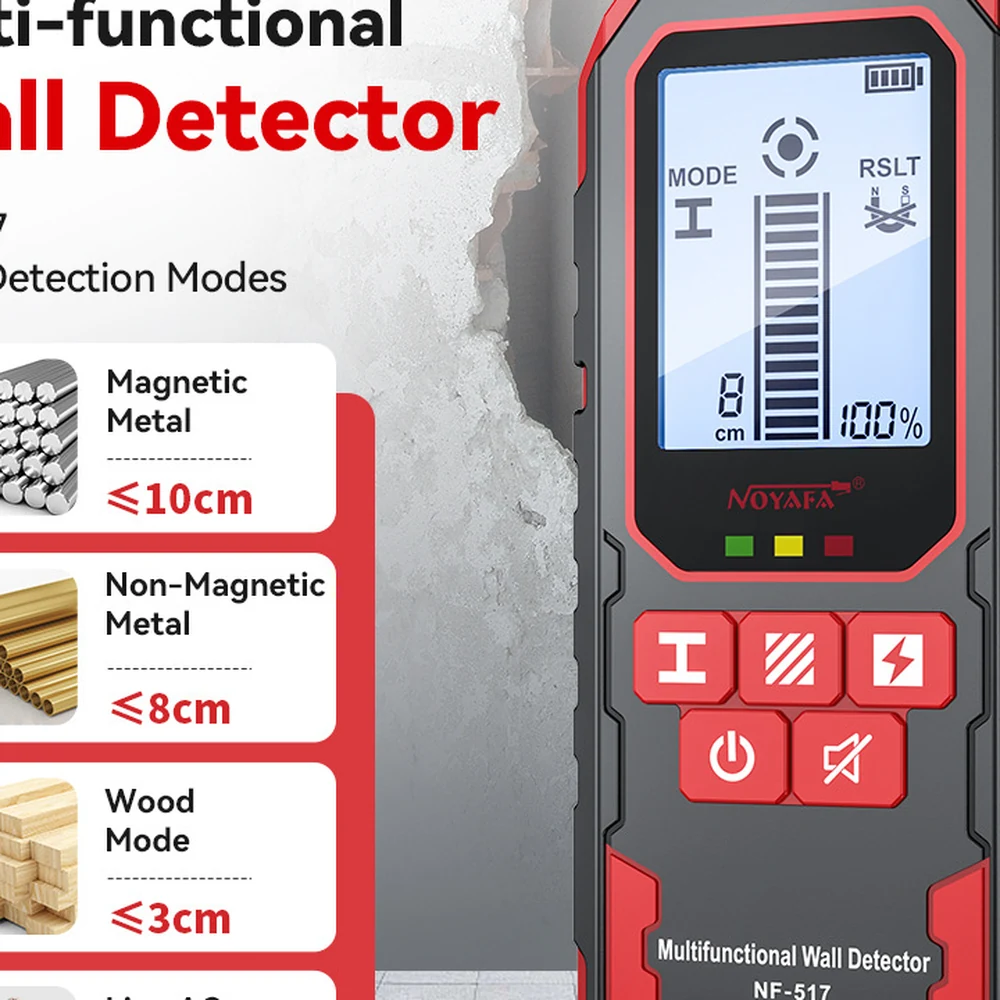
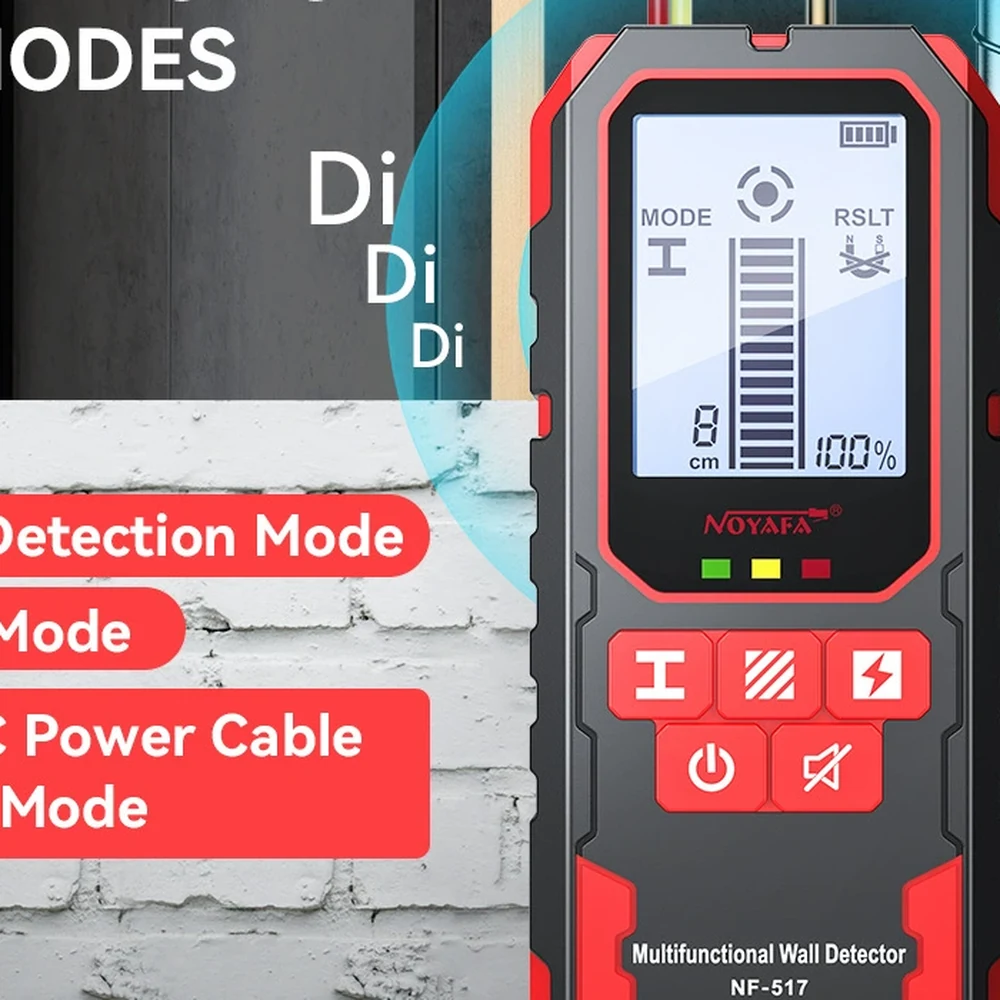
- Multi-mode detection: wood studs, metal (ferrous and non-ferrous), live AC wires
- Detection depth: up to 38mm for wood, 60mm for metal, 50mm for live wires
- UK-manufactured with UK-specific calibration profiles
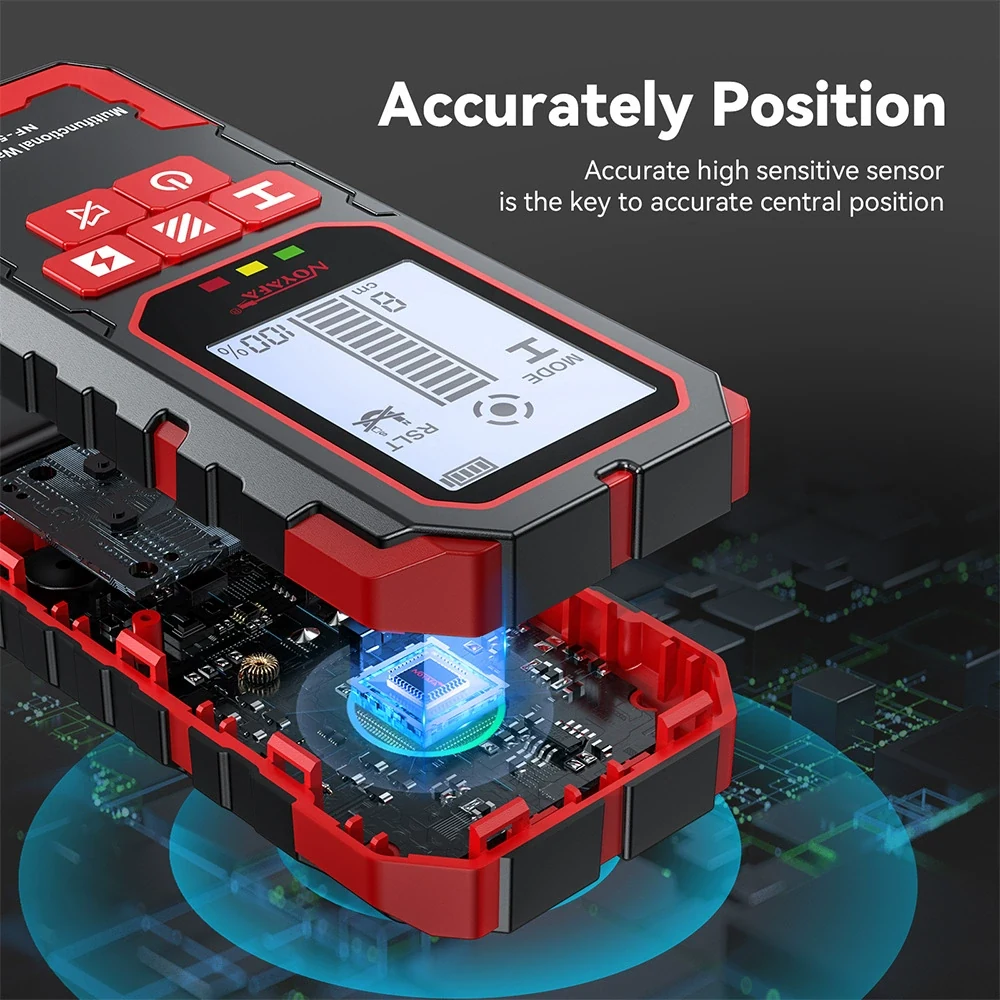
- LCD display with signal strength indicator
- Auto-calibration with manual override for difficult surfaces
The manual override calibration is the feature that actually matters here. On lath and plaster, auto-calibration often fails because the surface isn't uniform. Being able to manually set your baseline means you can account for that 35mm of lumpy Victorian plaster before you start scanning. That's the difference between finding the stud and putting a hole through a water pipe.
If you're doing a smart meter installation or mounting heavy shelving, that accuracy isn't optional — it's essential. And at £82.15, you could literally avoid a single call-out charge and the scanner's paid for itself.
Stanley Stud Finder vs Gotmeet: Direct Comparison
Numbers don't lie. Here's how these two wall scanners stack up on paper before we get into real-world use.
| Feature | Stanley S150 | Stanley S300 | NOYAFA NF-517 Wall Detector |
|---|---|---|---|
| Price (June 2026) | £25-30 | £35-45 | £82.15 |
| Wood detection depth | 38mm | 38mm | 38mm |
| Metal detection depth | 51mm | 51mm | 60mm |
| Live wire detection | No | Yes (51mm) | Yes (50mm) |
| Manual calibration override | No | No | Yes |
| UK-specific calibration | No | No | Yes |
| Display type | LED indicators | LED + LCD | LCD with signal strength |
| Manufactured in | China | China | UK |
| Lath & plaster performance | Poor | Fair | Good |
| Dot & dab performance | Fair | Fair | Good |
real-world use: How Each Scanner Performs on UK Walls
Right, so specs are one thing. Actually using these things on real walls is another. I tested both on three different wall types you'll find across — and honestly across most of the UK.
Test 1: Modern Plasterboard (2015 New Build, Salford)
Both the Stanley S150 and the Gotmeet found studs accurately on standard 12.5mm plasterboard. No surprises there. Stud centres were at 600mm as expected, and both devices pinpointed edges within about 5mm of each other. The Gotmeet's LCD showing signal strength was slightly more reassuring — you could see the reading build as you approached the stud centre rather than just getting a beep.
Verdict on modern plasterboard: basically a tie. Any half-decent stud finder UK buyers pick up will handle this.
Test 2: Lath and Plaster (1901 Terrace, Rusholme)
This is where things got interesting. My house. Walls are approximately 32-35mm thick with original lime plaster over lath.
The Stanley S150 couldn't calibrate properly. It kept giving false positives — picking up the laths as studs. I tried the slow-sweep technique, the two-direction method, everything the manual suggests. Still unreliable. You'd mark a "stud" location, drill a pilot hole, and hit nothing but plaster and air.
The Gotmeet with manual calibration override performed noticeably better. Not perfect — I want to be honest here — but it correctly identified 4 out of 5 stud locations I verified by drilling. The signal strength display helped because you could see a clear spike at actual studs versus the lower, more diffuse signal from laths. That visual feedback makes a massive difference when you're trying to distinguish between a 10mm lath and a 45mm stud behind 32mm of plaster.
Test 3: Dot and Dab (1998 Extension, Didsbury)
Dot and dab is weird because there's an air gap but no studs. What you're actually looking for here is the adhesive dabs (to avoid) and any buried services. The Stanley struggled with the inconsistent air gap — readings were all over the place. The Gotmeet's metal detection mode at 60mm depth picked up copper pipes that the Stanley missed entirely. That alone could save you from a burst pipe and a very expensive plumber visit. (Ask me how I know.)
Value for Money: Which Wall Scanner Should You Buy?
So what's the actual verdict? If you live in a new-build with standard plasterboard throughout, a basic stanley stud finder like the S150 from Screwfix will do the job. It's a known brand, it's reliable on simple walls, and you can pick one up easily.
But here's my honest take. Most of us don't live in new-builds. The average UK home is 50+ years old. If your walls have any character — any history — you need something that can handle the complexity. That's where the NOYAFA NF-517 Wall Detector at £82.15 makes more sense.
You're getting live wire detection (which the S150 doesn't have), deeper metal scanning (60mm vs 51mm), manual calibration for difficult walls, and UK-specific design — all for less than the Stanley S300 costs. As recommended by Which? consumer guidance, checking for buried cables before drilling should be non-negotiable for any home improvement project.
Who Should Buy What
Buy the Stanley S150 if: You only work on modern plasterboard, you want the reassurance of a heritage brand name, and you don't need wire detection.
Buy the NOYAFA NF-517 Wall Detector if: You have older walls (lath and plaster, artex over plaster, dot and dab), you want live wire detection included, you value UK manufacturing, or you want the best stud finder for mixed wall types without spending £40+.
Worth the extra couple of quid over the basic Stanley? Absolutely. My housemates have all borrowed mine at this point — for hanging mirrors, mounting a TV bracket, even checking where pipes run before we put up shelves in the kitchen. It's become one of those tools that just lives in the communal drawer. Sorted.
Frequently Asked Questions
Does a Stanley stud finder work on lath and plaster walls?
Basic Stanley models like the S150 struggle significantly on lath and plaster walls thicker than 25mm. The wooden laths create false positive readings that make it difficult to distinguish actual studs. The S300 performs slightly better but still lacks manual calibration for these challenging surfaces. For lath and plaster, a scanner with manual override calibration — like the Gotmeet at £82.15 — delivers more reliable results.
What is the best stud finder for UK homes in 2026?
The best stud finder UK buyers should consider depends on wall type. For older properties with lath and plaster or mixed construction, the NOYAFA NF-517 Wall Detector (£82.15, UK-manufactured) offers the best combination of detection depth, manual calibration, and live wire sensing. For simple plasterboard-only homes, a Stanley S150 at £25-30 remains adequate.
Can a wall scanner detect pipes and cables behind plasterboard?
Yes, multi-mode wall scanners detect metal pipes up to 51-60mm deep and live electrical cables up to 50-51mm deep. The Gotmeet detects metal at 60mm depth, while Stanley's S300 reaches 51mm. HSE guidelines recommend scanning for buried services before any drilling. Basic models like the Stanley S150 do not detect live wires, making them less safe for general DIY use.
How deep can a stud finder detect through UK walls?
Most mid-range stud finders detect wood studs up to 38mm deep — sufficient for standard 12.5mm plasterboard but borderline for lath and plaster at 32-40mm thickness. Metal detection typically reaches 51-60mm. The critical factor for UK walls isn't just depth but the scanner's ability to distinguish studs from laths, which requires either advanced algorithms or manual calibration capability.
Is the Gotmeet wall scanner better than a Bosch stud finder?
Bosch stud finders like the GMS 120 (around £80-100) offer professional-grade detection but at 3-4 times the price of the Gotmeet (£82.15). For most DIY and home improvement tasks, the Gotmeet provides comparable detection depths (38mm wood, 60mm metal) with UK-specific calibration at a fraction of the cost. The Bosch is better suited to commercial contractors scanning daily.
Where can I buy a stud finder in the UK?
Stanley stud finders are widely available at Screwfix, B&Q, and Toolstation from £15-45. The NOYAFA NF-517 Wall Detector is available directly from gotmeet.co.uk at £82.15 with UK shipping. Online purchase often provides better pricing than in-store, and specialist retailers like Gotmeet offer product support specific to UK wall types and applications.
Key Takeaways
- UK walls are harder to scan than American drywall — 38% of UK homes pre-date 1946 with lath and plaster walls 25-40mm thick that confuse standard stud finders.
- The Stanley S150 (£25-30) works well on modern plasterboard but lacks live wire detection and struggles on walls thicker than 25mm.
- The NOYAFA NF-517 Wall Detector (£82.15) offers better value with live wire detection, 60mm metal scanning depth, and manual calibration for difficult UK walls — all at a lower price than the Stanley S300.
- Manual calibration override is the key differentiator for older properties — it's the feature that separates reliable detection from guesswork on lath and plaster.
- Always scan for live wires before drilling — HSE guidelines are clear on this, and only multi-mode scanners (Gotmeet, Stanley S300, Bosch GMS range) offer this safety feature.
- For mixed wall types typical in UK homes, the Gotmeet's UK-specific design gives it a practical edge over scanners calibrated primarily for American construction standards.
- At £82.15, the Gotmeet pays for itself by avoiding a single tradesperson call-out — average UK handyman rates sit at £40-60 per hour in 2026.
Need a reliable wall scanner before your next DIY job?
The NOYAFA NF-517 Wall Detector helps check for wood, metal and live AC cable locations — £82.15 with free UK delivery, 30-day returns and 12-month warranty.
View NOYAFA NF-517 Wall Detector — £82.15Free UK delivery · 30-day returns · Secure checkout