Wall Scanner vs Cable Tracer: Which Tool Matches the Job?
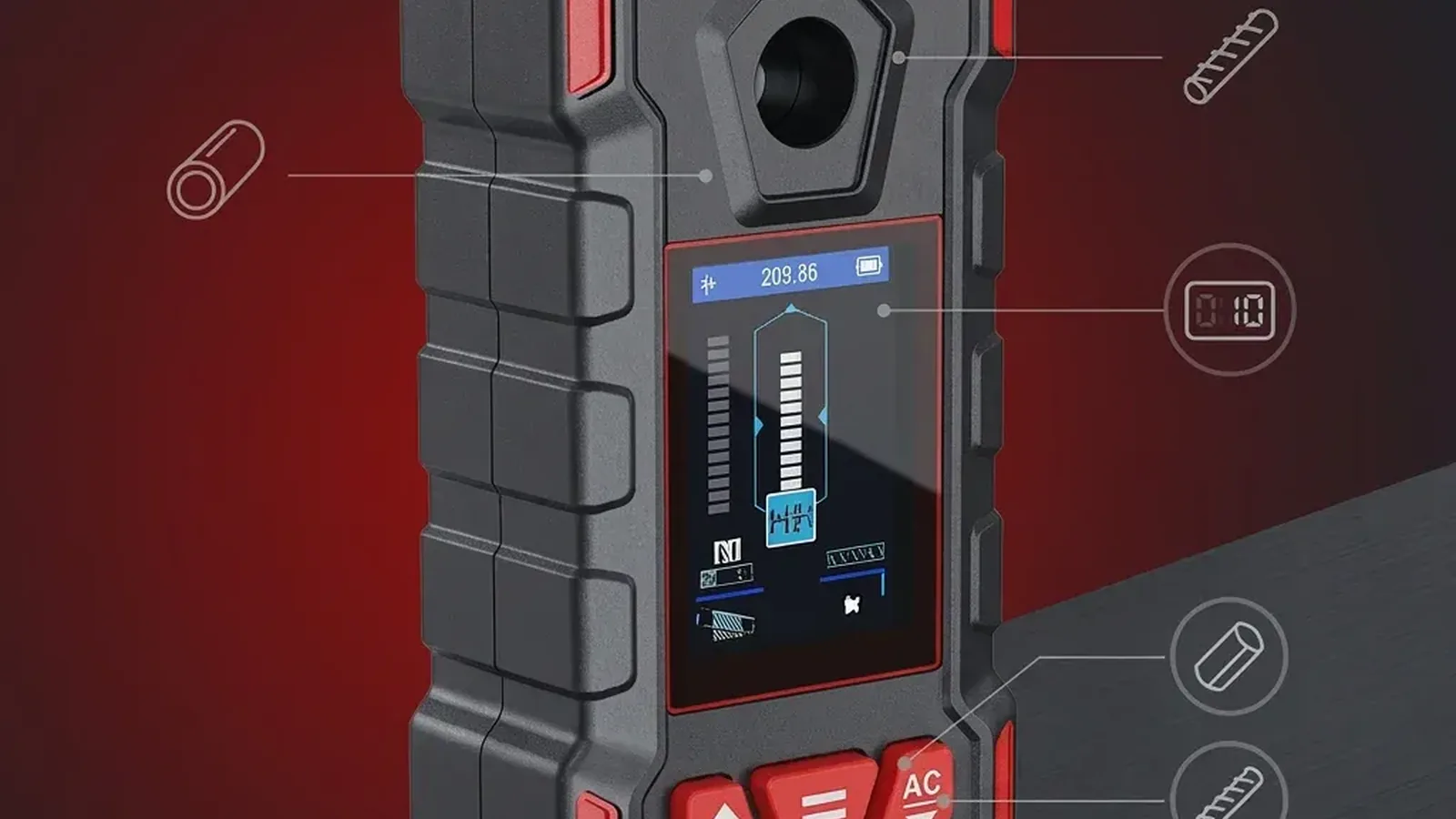
Short answer: a wall scanner and a cable tracer answer different questions. A wall scanner is generally used from the surface to indicate possible concealed objects, depending on the model. A cable tracer is used to follow or identify a conductor, depending on its design, signal method and access. Neither tool proves that a conductor is dead, and neither gives permission to drill. Safe isolation and electrical testing are separate competent-person tasks.
For a UK homeowner preparing a weekend fixing job, the distinction matters. If you are putting up a shelf, mirror, blind or small cabinet, you may want more information about the area behind the plaster. If you are trying to identify a particular cable or follow its route, you are asking a different question. That second task can require specialist equipment, access and electrical competence.
The plain-English distinction
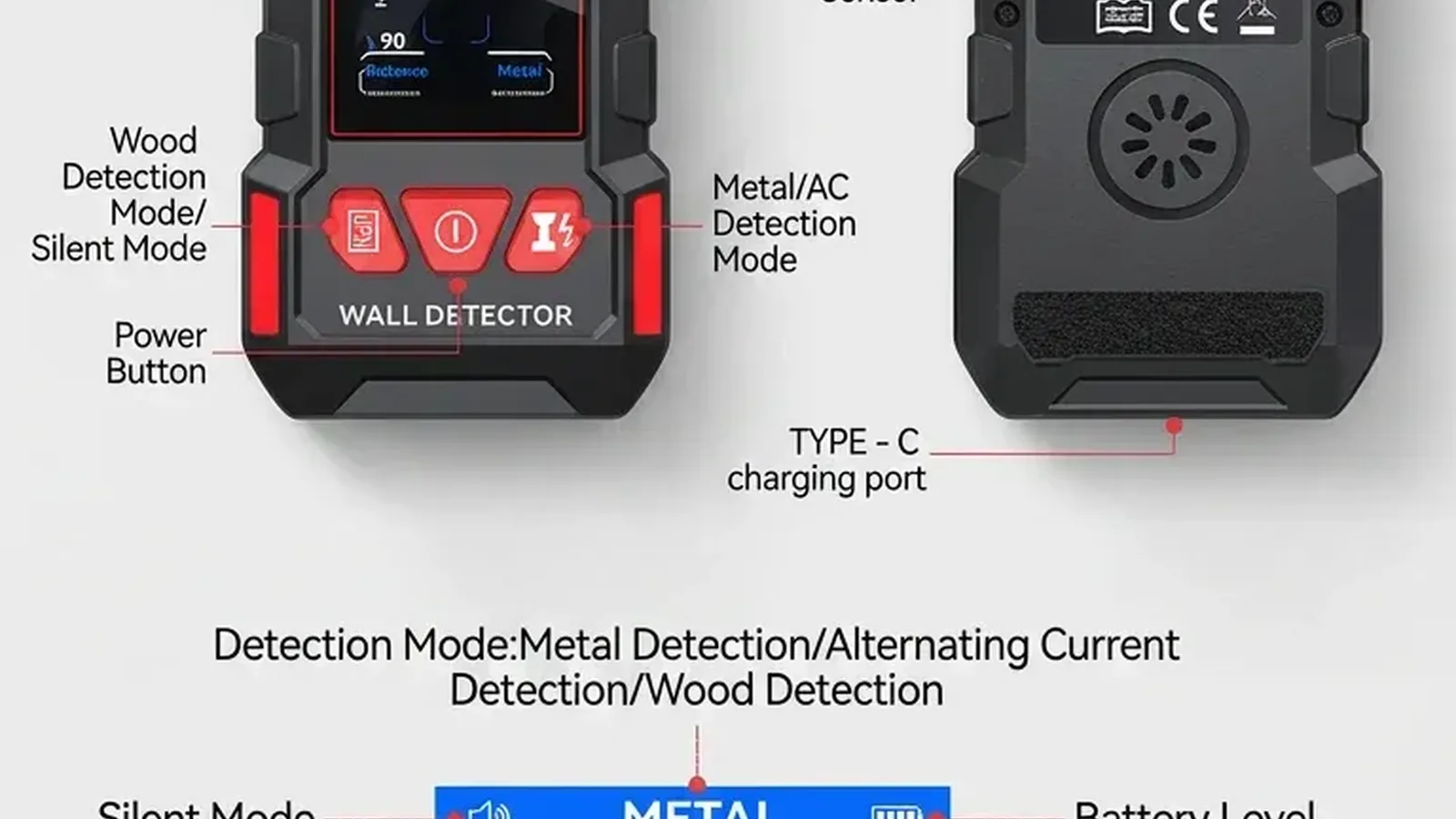
A wall scanner is a surface-checking tool. You move it over a wall, ceiling or floor and interpret the indications it gives. Depending on the detector category, those indications may relate to metal, possible live wiring or wooden framing in suitable dry walls. The output can warn that a proposed fixing area needs more caution, but it remains indirect.
A cable tracer is a route or identification tool. In broad terms, tracing equipment applies or follows a signal to help identify a conductor or its path. The exact method depends on the equipment and whether safe access to a cable or circuit is available. That means a cable tracer is not simply a more powerful wall scanner, and it may be the wrong category for a casual pre-drilling check.
What a wall scanner can and cannot tell you
A scanner can help build a provisional risk map. It may show a repeated line, a metal response, a possible live-wire warning or a likely framing location, depending on the device and wall. This can be useful before fitting cupboards, rails, curtains or brackets. It can also provide a clear reason not to drill when a signal appears close to the intended hole.
The limitations matter just as much. Manufacturer information for detector categories notes that possible live-wire indication can depend on the signal reaching the tool. Damp walls, metallic foil, conduit, earthing conditions, conductive tiles and interference may prevent, spread or distort an indication. Other objects can be ambiguous. A scanner therefore supplies evidence to consider, not a certificate that the wall is clear.
What a cable tracer can and cannot tell you
A tracer is more relevant when the question is which cable this is or where it runs. Electrical Safety First's safe-isolation guide discusses cable-detection equipment and signal generators as part of cable identification in professional contexts. The method depends on whether conductors are accessible and on the situation being controlled.
Identification is not the same as proving dead. The absence of a non-contact indication must not be treated as proof that a conductor is dead. Safe-isolation guidance separates cable identification from selecting and securing the correct isolation point and proving conductors dead with appropriate test equipment. Those are competent electrical practices, not steps for a general DIY article.
Choose the tool according to the question
| Your question | More relevant category | What it may add | What remains unresolved |
|---|---|---|---|
| Is something behind this part of the wall? | Wall scanner | Possible concealed-object indications. | Exact identity, condition and safe-drill approval. |
| Where is framing likely to be? | Wall scanner suited to the wall type | A likely timber or metal pattern. | Fixing strength, hidden services and full construction. |
| Which route does a cable take? | Cable tracer, depending on design and access | Possible route or identification information. | Electrical safety, isolation status and DIY suitability. |
| Is this conductor dead? | Neither as a standalone answer | A detection or tracing indication only. | Proving dead requires competent safe-isolation and testing practice. |
| Can I drill here? | Use scanning as one input | More information about risk and uncertainty. | No tool removes the need for judgement and professional help when unsure. |
Common homeowner scenarios
For a shelf on a plasterboard partition, a wall scanner is usually the more natural first category because the task concerns framing and possible concealed services around a fixing area. For blinds or curtain poles near a window, scanning may indicate metal or another concealed object, but it cannot select the fixing or prove the absence of cables. For kitchen cabinets, it belongs within a wider plan covering wall type, layout, load and plumbing or electrical services.
Cable tracing becomes more relevant when the cable itself is the subject of the investigation. If the task involves removing electrical accessories, exposing conductors, opening enclosures, identifying circuits or deciding whether a conductor is dead, stop treating it as ordinary tool shopping. That is electrical work territory and requires competent control.
Where both categories can create false confidence
A wall scanner may show a broad response over a damp or conductive area. A cable tracer may depend on a signal path, access point or circuit condition that has not been verified. In an altered property, documented routes may be incomplete. The correct response to an unexplained result is to keep the area unresolved, not to choose whichever reading makes the planned hole convenient.
The tools are still useful. Their role is to reduce guesswork and reveal stop points. A sensible indication may lead you to move a fixing, scan a wider area or ask for a professional check. An inconsistent indication is itself useful because it tells you not to proceed on assumption.
Pre-drilling checklist
- Write down the real task: surface checking, framing location, cable routing or electrical work.
- Use a wall scanner for non-destructive surface indications before ordinary fixings.
- Do not buy a cable tracer expecting a simple safe-to-drill answer.
- Map sockets, switches, wall lights, radiators, controls and pipe entries.
- Scan wider than the proposed holes and repeat from another direction.
- Treat broad, conflicting or unstable readings as stop conditions.
- Follow Electrical Safety First's advice to switch off power for DIY close to electrics.
- Remember that this precaution is not the same as professional safe isolation.
- Never assume a cable is dead because a detector or tracer shows no indication.
- Use a registered competent electrician when cable identity, isolation or alteration is involved.
Buying guidance without overbuying
For normal homeowner fixing work, begin with the best stud finder UK guide and compare wall scanners rather than specialist tracing equipment. The guide to finding wires before drilling adds the electrical-safety context. A magnetic stud finder detects metal attraction and should not be confused with cable tracing.
For cable identification, do not choose by the cheapest title. Ask whether the task requires conductor access, signal generation, circuit identification or electrical testing. When those questions involve mains wiring, the appropriate purchase may be a professional visit rather than another handheld tool.
FAQ
Is a wall scanner safer than a cable tracer?
It is not safer in an absolute sense; it is intended for a different job. A wall scanner is generally more relevant to non-destructive pre-drilling checks. A cable tracer may be more relevant to route or conductor identification, which can introduce access and competence requirements.
Can a cable tracer prove a wire is dead?
No. Tracing or identifying a cable is not the same as proving it dead. Safe-isolation guidance treats proving dead as a separate process using appropriate test equipment and competent practice.
Can a wall scanner miss a cable?
Yes. Wall materials and signal conditions can affect possible live-wire indications. A negative result means not indicated under those conditions, not no cable present.
Which category suits a shelf?
A wall scanner or stud finder is normally more relevant because you are investigating the surface and nearby fixing area. You still need visible-service checks, wall identification and suitable fixing instructions.
When does the task belong to an electrician?
Use a registered competent electrician when the task involves opening accessories, identifying conductors, altering wiring, isolating a circuit, proving dead or working around uncertain mains cables.
Final buying advice
Choose a wall scanner when the practical question concerns possible concealed objects before drilling. Consider cable tracing only when the real question is cable route or identity, and recognise that the task may belong with electrical competence. For ordinary wall checks, you can review a multi-mode wall detector without treating it as a cable tracer, electrical tester or guarantee of safe drilling.
Sources and further reading
- electricalsafetyfirst.org.uk: UK cable-location, power-off and competent-electrician guidance for DIY.
- electricalsafetyfirst.org.uk: Professional cable identification and safe-isolation boundaries, including proving dead as a separate practice.
- hse.gov.uk: Safe working practices for work on or near electrical equipment.
- bosch-professional.com: Wall-scanner category capabilities and limitations; not GOTMEET product evidence.