Stud Finder for Brick Walls UK: Identify the Wall Before Choosing the Tool
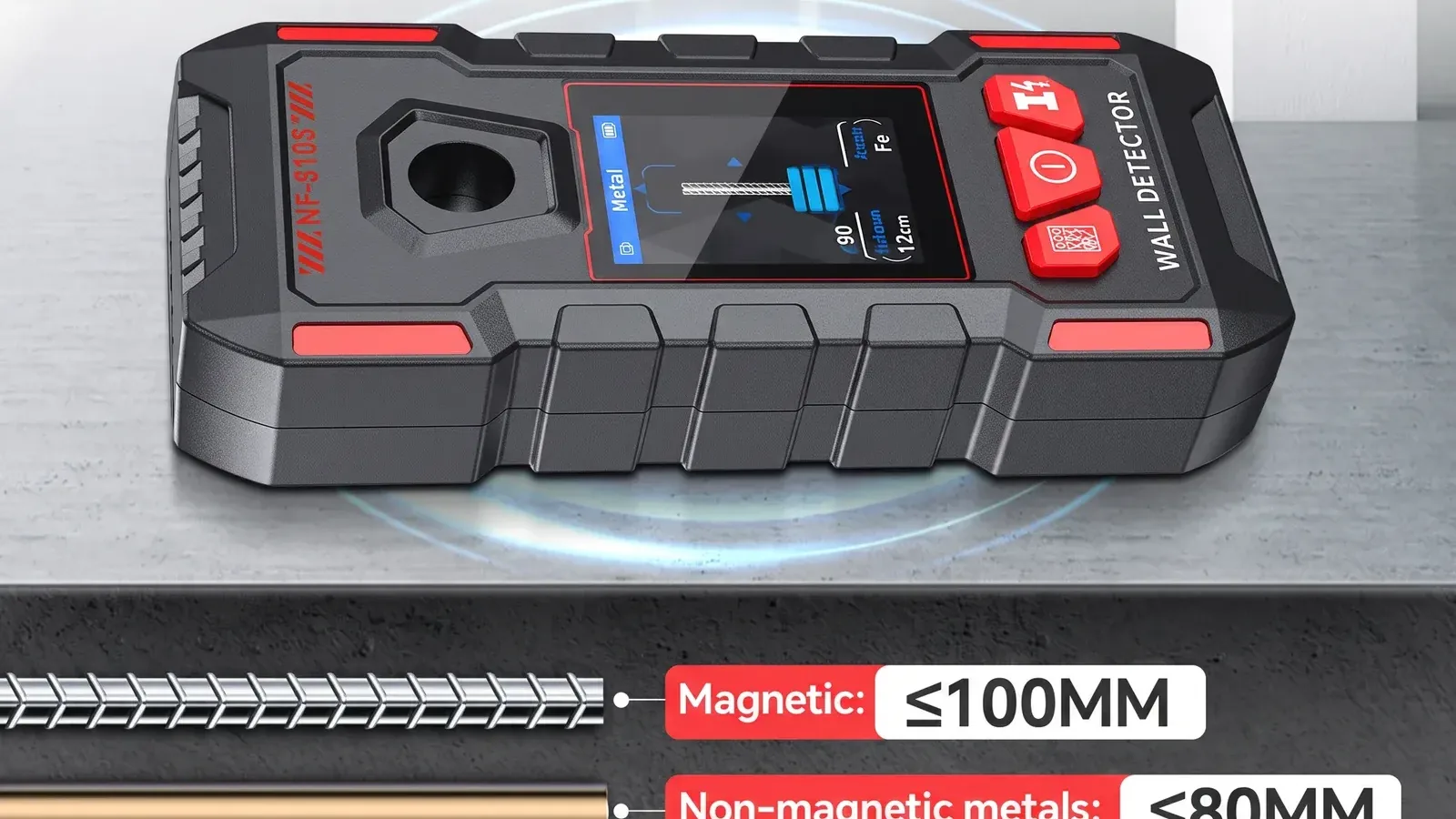
Short answer: choose a stud finder for brick walls only after identifying the wall you actually have. Solid brick or blockwork does not normally hide timber studs in the way a framed plasterboard partition does. A detector may provide clues about metal, possible live wiring or framing behind a finish, but it cannot prove that a point is safe to drill or suitable for a structural fixing.
The common mistake is to ask for a stud finder as though every UK wall has the same hidden structure. A single home may contain solid masonry, dot-and-dab dry lining, timber or metal framed partitions, tiled sections, old plaster repairs and boxed-in service routes. The useful questions are what the wall is made from, what you need to locate, and what evidence would make you stop.
First decide whether you really have a stud wall
A stud belongs to a framed wall or lining system. Timber partitions contain vertical timber members behind plasterboard. Metal-framed partitions use metal channels rather than timber. A solid masonry wall is mainly brick, block or stone. It may have plaster, render, battens or dry lining over it, but the masonry itself is not a timber frame.
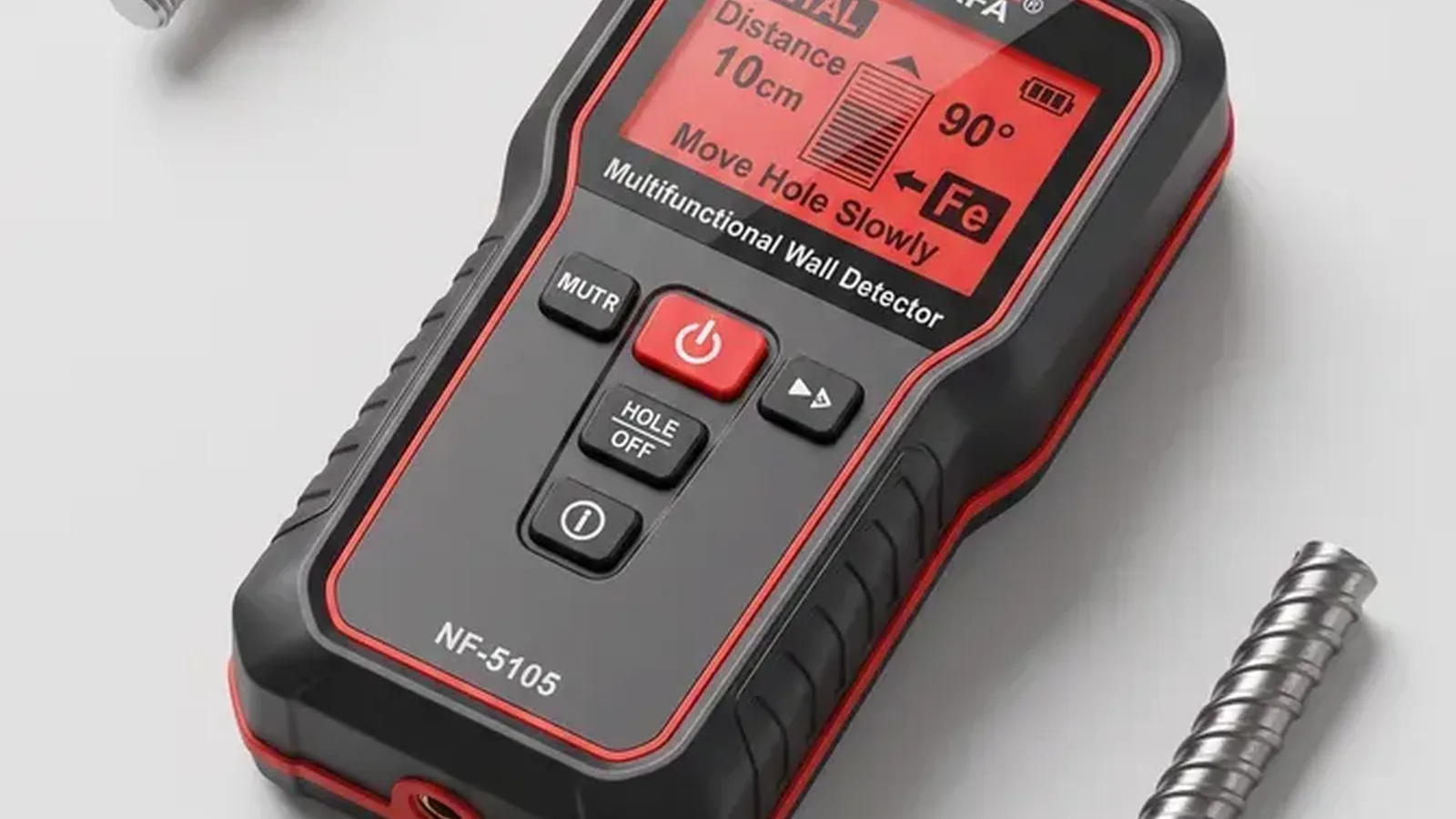
The distinction changes the meaning of a scan. A metal indication on solid masonry might relate to a pipe, conduit, fixing, reinforcement, corner bead or another buried object. A non-metallic change on a dry-lined wall might relate to timber, adhesive dabs, a plastic pipe or a density change. The detector cannot turn an indication into a complete object identity by itself.
Wall types and what the result may mean
| Likely wall type | What you may be looking for | How to interpret a scan |
|---|---|---|
| Solid brick, block or stone | Metal objects, possible live-wire indications, services and fixing uncertainty. | Use readings as warnings or clues; do not assume timber studs behind the masonry. |
| Dot-and-dab dry lining | Board, adhesive dabs, masonry backing and services in voids or chases. | Expect mixed responses as the board, adhesive and backing change. |
| Timber framed partition | Studs, noggins, metal fixings, cables and pipes. | Look for repeatable patterns and cross-check before fixing. |
| Metal framed partition | Metal channels, fixings and services. | Do not label every metal response as a pipe or every quiet area as clear. |
| Tiled, foil-backed or damp area | Services and backing structure behind a difficult surface. | Use a lower confidence level because the surface may affect indications. |
Clues that suggest solid masonry
Solid masonry often feels hard when tapped and may occur on external walls, party walls, chimney breasts and older load-bearing walls. Openings can include lintels, beads and repair materials that confuse a simple metal response. Room position and building age provide context, but alterations mean they should not be treated as proof.
On solid masonry, the task is generally not to find a timber stud. It is to understand concealed-service risk and whether the proposed fixing system suits the actual masonry. A wall detector may help reveal a possible metal or live-wire indication. It cannot approve the fixing, inspect the condition of the brick or confirm that a heavy item is safe to mount.
Clues that suggest dot-and-dab dry lining
Dry lining can make a masonry wall sound hollow because plasterboard sits in front of the brick or block. Dot-and-dab systems use adhesive pads behind the board, leaving changing voids between the board and masonry. Those voids, dabs and changes in density can make the scan less straightforward than a simple framed partition.
A detector may respond to metal fixings, pipes, cables, adhesive areas, board edges or backing changes. If you are mounting an item, you still need a fixing decision that matches the true backing and load. A scan is one input, not a substitute for that decision.
Clues that suggest a framed partition
A framed partition is where the term stud is most useful. Clues can include plasterboard on both sides, a lighter hollow sound or visible evidence from an unfinished edge or existing opening. Even here, timber, metal channels, noggins, pipes and cables may share the same wall.
Look for a pattern rather than one beep. A suspected vertical framing line should repeat over a useful distance and agree with other construction clues. If it appears only once, changes direction, sits close to a socket or conflicts with another indication, keep it marked as unresolved.
What a detector can and cannot tell you
A detector can help create a provisional map of possible hidden objects. Depending on the tool and surface, it may indicate metal, possible live wiring or a change consistent with framing. It cannot prove the route of a cable, identify every pipe, assess masonry strength or certify safe drilling.
Detector-category guidance also documents limitations. Live-wire indication can be affected by moisture, metallic shielding, earthing and conductive surfaces. Wood-detection functions on some tools are intended for dry walls with wooden substructure, not as universal masonry scanners. Other objects can sometimes create a non-metallic response. These are reasons to keep the interpretation conservative.
A practical scan and mark approach
Start with visible clues. Note sockets, switches, radiators, pipe entries, wall lights, appliance points, previous holes and recent repairs. Electrical Safety First highlights the risk of drilling, nailing or screwing into hidden wall cables and advises locating cables before work. It also advises switching off power for DIY close to electrics and asking a registered competent electrician when unsure.
Scan a wider area than the intended bracket or rail. Move the tool as its instructions require, repeat each pass and mark uncertain zones lightly with pencil or tape. Scan from another direction where the surface permits. If a reading broadens, moves, changes category or appears near a likely service route, stop and reconsider the position.
Quick buying checklist
- Identify the wall as solid masonry, dry lined, timber framed or metal framed as far as possible.
- Decide whether the real concern is a possible cable, pipe, metal object, framing member or fixing background.
- Do not buy a stud finder on the assumption that brick contains timber studs.
- Choose a tool category that matches the material and the question.
- Read the detector limitations before using it on damp, tiled or layered surfaces.
- Use visible accessories and service entries alongside the scan.
- Treat each result as a clue, not as permission to drill.
- Escalate electrical uncertainty, unknown services and heavy loads to an appropriate competent trade.
Stop points before drilling
Do not drill when repeated passes disagree. Do not drill close to sockets, switches or routes where a cable or conduit may run. Do not drill when a metal indication could be a service rather than a fixing. Do not rely on the absence of a signal as evidence that the wall is clear.
Approved Document P provides the England framework for electrical safety in dwellings. For a homeowner choosing a bracket position, the practical boundary is straightforward: scanning does not make electrical work safe, and unresolved electrical risk belongs with a competent electrician.
Related guides for the next decision
The best stud finder UK guide explains the broader detector categories. If avoiding concealed electrical cable is the main concern, read how to find wires before drilling in the UK. The magnetic stud finder guide explains the narrower role of magnets and metal fixings.
FAQ
Can a stud finder find studs behind brick?
The question is often misplaced. Solid brick or blockwork is not a timber stud wall. A detector may react to hidden features in or behind a layered wall, but you should not label them timber studs unless the construction supports that conclusion.
Is a brick wall safer to drill than a stud wall?
No. Solid walls can contain cables, pipes, metalwork, old fixings and undocumented alterations. The pattern of risk changes, but the risk does not disappear.
What if an external wall sounds hollow?
It may be dry lined over masonry. Dot-and-dab adhesive, battens, insulation and service voids can create hollow areas and mixed readings. Treat it as a layered wall until better evidence is available.
Can a reading choose the fixing for me?
No. A scan cannot assess brick condition, board strength, anchor suitability or load capacity. Follow the mounted item's instructions and obtain competent advice for heavy or safety-critical installations.
Does a quiet scan mean the wall is clear?
No. It means the tool did not indicate an object under those conditions. Wall build-up and detector limitations can affect the result, so combine it with other evidence and stop when uncertainty remains.
Final buying advice
For brick walls, buy with a wall-type mindset rather than a stud-only mindset. The useful tool is one that helps investigate the actual hidden risks without pretending to identify the whole wall. A scanner can help you decide where not to drill, but it cannot prove where drilling is safe. You can review a multi-mode wall detector and compare the category with the wall and task you actually have.
Sources and further reading
- electricalsafetyfirst.org.uk: UK cable-location, power-off and competent-electrician guidance for DIY near electrics.
- gov.uk: England electrical-safety framework for dwellings.
- bosch-professional.com: Detector-category limitations for dry-wall wood detection, ambiguous objects, moisture, metallic foil and conductive surfaces.