How to Find Ceiling Joists with a Stud Finder: A Cautious UK Checklist
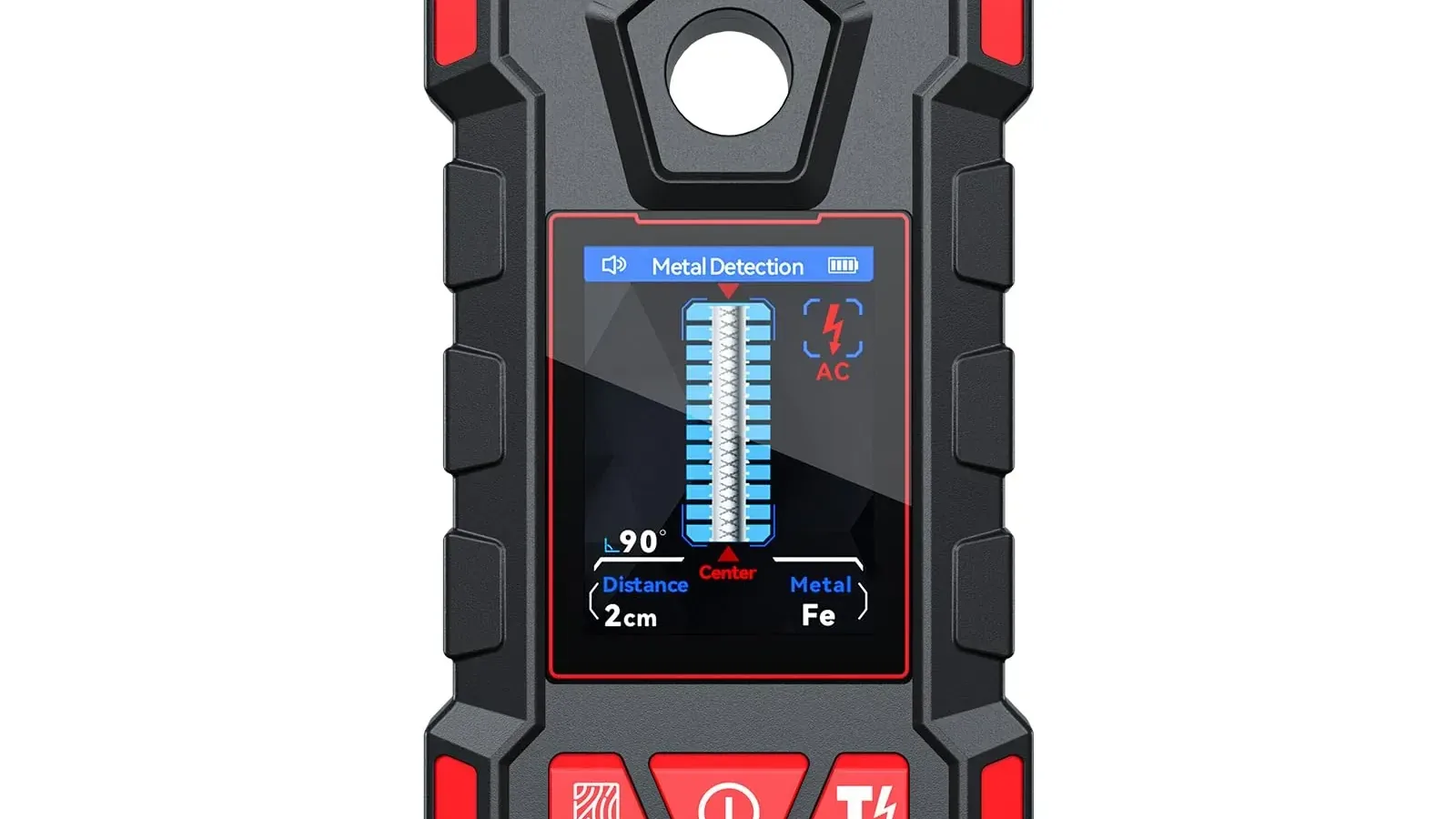
Short answer: use a stud finder as one cautious source of information, not as proof. Scan slowly across the ceiling, mark changes that repeat, cross-check at right angles, compare the pattern with visible room clues, and stop if the indication could be a batten, furring strip, pipe, cable or unknown layer rather than a structural joist.
Ceilings are harder to interpret than plain plasterboard walls. You are working overhead across paint texture, old plaster, repair patches, insulation, service routes and possibly several layers of board. A detector can help build a likely map, but the result still needs judgement. The aim is to reduce guesswork and decide whether more investigation or a competent installer is needed.
Start with the likely ceiling construction
Before scanning, look at the room. Note any loft hatch, ceiling rose, downlight, smoke alarm, coving break, crack or patch. If information about the floor above is visible elsewhere, note its direction without assuming that it settles the answer. Extensions, lowered ceilings and previous alterations can interrupt an otherwise regular structure.
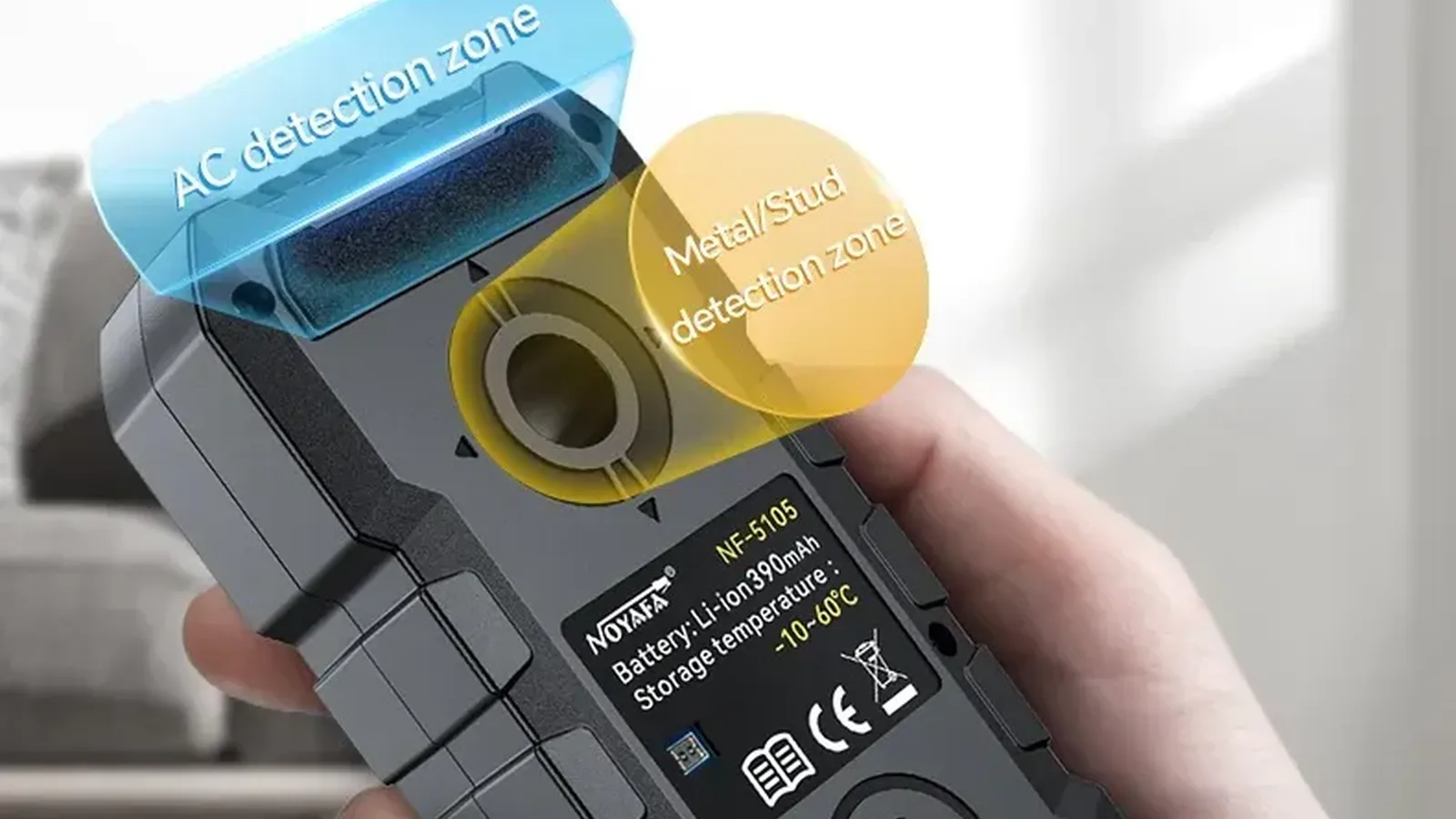
Be careful with the word joist. A detector response may relate to a timber joist, but it may also relate to a batten fixed below it, a furring strip, metal lath, screw line, pipe, cable, foil-backed material or another concealed object. A lining support is not automatically a structural joist, and the scanner cannot assess the fixing capacity of either.
A cautious scan, mark and cross-check workflow
Use the detector according to its instructions and select the relevant material setting if the tool provides one. Keep it flat against the surface and move slowly. On a dusty or textured ceiling, a strip of low-tack tape can provide a clear marking surface without turning every first response into a permanent pencil mark.
Make an initial pass across the expected direction. When an indication appears, mark it lightly, continue past it, lift and restart the tool as required, then repeat from a different starting point. Scan back from the opposite direction. The useful area is where several slow passes agree, not the first beep or display change.
Next, scan at right angles. A repeatable line gives more context than an isolated dot. If the behaviour suggests two edges, mark both as provisional and note the likely centre between them. Repeat the process farther along the suspected line. Do not drill yet; first ask whether the direction, continuity and nearby fittings make sense.
What a pattern may mean
| What you notice | Possible meaning | Next decision |
|---|---|---|
| A repeatable line at several points | Could be a joist, batten, pipe, cable route or metal fixing line. | Cross-check direction, spacing and nearby services. |
| A short response near a ceiling rose or downlight | Could relate to wiring, a fitting support or metal part. | Do not drill nearby; seek competent electrical advice if uncertain. |
| Several close parallel lines | May be joists, battens, laths, furring or a layered lining. | Use access above or installer knowledge before relying on one line. |
| Unstable readings over a broad area | Surface texture, moisture, foil, metal mesh or mixed construction may be affecting the scan. | Stop and use another source of evidence. |
Use room clues to test the interpretation
A plausible ceiling map should agree with evidence beyond the detector. A suspected line that continues consistently and relates sensibly to a loft hatch or accessible structure may support the interpretation. A mark that appears only near a fitting, conflicts with the room layout or disappears on repeat passes should remain unresolved.
Older UK homes may contain lath and plaster, multiple skim coats, repair boards and old fixing lines. Newer properties may use engineered joists, metal web joists, resilient bars or dropped ceilings. The detector does not know the building history. If safe access above already exists, visual information from an accessible loft may help, but do not disturb insulation, wiring or pipework unless you are competent to do so.
Services above the ceiling are a separate risk
Cables and pipes can run above a ceiling, through structural members or near light fittings. A ceiling scan never proves that all services have been found. Electrical Safety First advises DIYers to locate hidden cables before work, switch off power for DIY close to electrics and seek a registered competent electrician when unsure.
Do not attempt live electrical work. If a proposed fixing is close to a ceiling rose, downlight, alarm, cable route or another sign of electrical work, stop and obtain competent advice. Safe isolation is formal electrical-safety practice; it is not performed by a stud finder and is not a shortcut that can be taught within a ceiling-fixing guide.
Do not turn a likely joist into a load guarantee
Finding a likely timber line does not prove it can support a ceiling fan, projector, storage rack, heavy light or any other load. Capacity depends on the real structure, its condition, the fixing, load direction and the mounted item's instructions. The detector cannot inspect the timber or approve a design.
The same principle applies to lighter fittings. A small hole can still hit a concealed service, and a light item fixed into the wrong lining can still fail. Treat scanning as part of planning rather than the final installation decision.
Quick ceiling-joist checklist
- Identify the likely ceiling construction before scanning.
- Note fittings, hatches, patches and other visible clues.
- Scan slowly in one direction and repeat from the opposite direction.
- Mark only repeatable indications, preferably on low-tack tape.
- Cross-check at right angles to build a line rather than a single point.
- Compare the map with any safely visible structure above.
- Treat ceiling roses, downlights and service-heavy areas as stop points.
- Do not assume a batten or lining support is a structural joist.
- Do not assume a negative scan means no services are present.
- Use a competent installer for heavy, overhead or unclear work.
Common mistakes to avoid
The first mistake is following one response without repeating it. The second is assuming every regular line is structural; battens and furring can also form regular patterns. The third is scanning only at the exact intended hole rather than mapping a wider area. The fourth is ignoring services because the fitting seems small. The fifth is choosing fixings before identifying the ceiling and reading the mounted product's instructions.
For wider tool selection, read the best stud finder UK guide. The guide to finding wires before drilling provides a focused concealed-cable checklist, while the magnetic stud finder guide explains the narrower role of finding metal fixings.
FAQ
Can a stud finder definitely find ceiling joists?
No. It can indicate changes that may help identify a likely line, but ceiling material, services, metal, battens, moisture and layered construction can confuse the result. Keep the conclusion provisional until other evidence agrees.
How do I tell a joist from a batten or furring strip?
A detector alone may not distinguish them. Consider the wider ceiling system, safe access above, records and the intended load. If the distinction matters for safety, ask a competent installer or builder to confirm it.
Is it safe to drill where the scanner shows no cable?
No. A quiet scan is limited information, not permission. It does not prove that every cable, pipe or other service has been found.
Can I hang a heavy item once I find a likely joist?
Not from the scan alone. Follow the mounted item's instructions and obtain professional advice when the load is heavy, dynamic, overhead or safety-critical.
Should I use the same marks across the entire room?
No. Recheck along the route because alterations, openings, doubled members and changes in ceiling construction can interrupt an apparent pattern.
Final buying advice
The best method is conservative: scan, mark, repeat and cross-check before deciding whether the evidence is adequate for the job. If you need a tool for broader pre-drilling checks, you can review a multi-mode wall detector, but no detector should be treated as a guarantee of joist position, fixing capacity or service-free drilling.
Sources and further reading
- electricalsafetyfirst.org.uk: UK hidden-cable, power-off and competent-electrician guidance for DIY.
- electricalsafetyfirst.org.uk: Safe isolation is formal electrical-safety practice for competent people.
- hse.gov.uk: Work on or near electrical equipment requires safe working practices and competence.
- bosch-professional.com: Detector-category workflow for straight and cross-wise scans, marking and interpreting ambiguous objects.